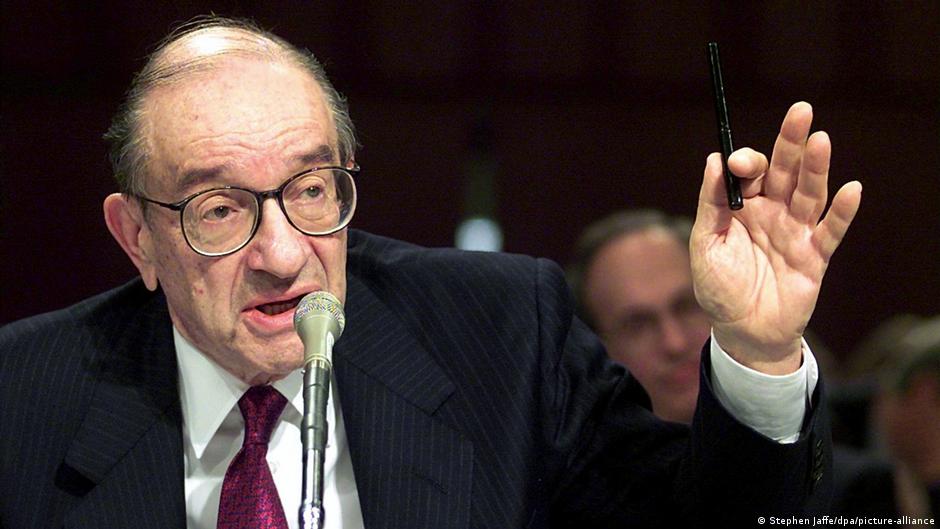
Alan Greenspan's Enduring Influence on Global Economics
Alan Greenspan, an economist whose tenure as Chairman of the United States Federal Reserve spanned from 1987 to 2006, became an almost mythical figure in global finance. His leadership coincided with a period of significant economic transformation, including the rise of globalization and technological advancements. Greenspan was often characterized by his deliberate and sometimes enigmatic public statements, a style that earned him the moniker 'The Oracle.' During his nearly two decades at the helm of the central bank, he was widely credited with guiding the American economy through several challenging periods, including the 1987 stock market crash, the Asian financial crisis of the late 1990s, and the dot-com bubble burst. His approach, often described as pragmatic and data-driven, focused on maintaining price stability while fostering sustainable economic growth.
Greenspan’s early career provided a strong foundation for his later role. Born in New York City in 1926, he initially pursued studies in music before shifting his focus to economics. He earned his bachelor's, master's, and Ph.D. degrees in economics from New York University. Before joining the Fed, Greenspan gained experience in the private sector, notably as a corporate economic consultant. His intellectual roots were also influenced by his association with Ayn Rand, a philosopher whose objectivist principles advocated for free markets and limited government intervention. This background is often cited by analysts when discussing his policy perspectives, particularly his strong belief in the self-regulating nature of markets.
The 'Great Moderation' and Greenspan's Monetary Policy
The period during Greenspan's chairmanship is often referred to as the 'Great Moderation,' an era characterized by reduced macroeconomic volatility, including lower inflation and more stable economic growth in many industrialized nations. Proponents argue that Greenspan's monetary policy decisions, such as his adept use of interest rate adjustments, played a crucial role in achieving this stability. His supporters point to his willingness to act decisively, sometimes pre-emptively, to address potential economic threats. For instance, his quick response to the 1987 stock market crash, by assuring liquidity, is frequently highlighted as a testament to his leadership.
However, Greenspan's tenure was not without its critics, even during the 'Great Moderation.' Some economists argued that his policies, particularly the prolonged periods of low-interest rates, contributed to the formation of asset bubbles. These concerns would intensify significantly in the years following his departure from the Fed.
The Shadow of the 2008 Financial Crisis
The global financial crisis of 2008-2009 significantly reshaped the perception of Alan Greenspan's legacy. While he had retired in 2006, many analysts and policymakers began to scrutinize the potential links between his policies and the conditions that led to the crisis. A central point of contention was his approach to regulating financial markets, particularly his advocacy for deregulation and his belief in the self-correcting mechanisms of the market. Critics argued that his reluctance to impose stricter regulations on derivatives and the subprime mortgage market allowed systemic risks to accumulate unchecked.
In testimony before Congress in 2008, Greenspan famously acknowledged a 'flaw' in his ideology, stating, 'I have found a flaw in the model that I perceived is the critical functioning structure that defines how the world works, so to speak.' This admission was widely interpreted as a concession regarding his long-held faith in the ability of financial institutions to self-regulate. The crisis prompted a widespread re-evaluation of economic theories and regulatory frameworks, and Greenspan's role in the preceding decades became a focal point of these discussions.
Reassessing a Complex Legacy
Today, Alan Greenspan's legacy remains a subject of considerable debate among economists, historians, and policymakers. On one hand, he is remembered for his intellect, his influence during a period of sustained economic expansion, and his ability to command respect on the world stage. On the other hand, the profound impact of the 2008 financial crisis has cast a long shadow, leading many to question whether his policies inadvertently sowed the seeds of future instability. His career serves as a powerful case study in the complexities of central banking and the delicate balance between fostering economic growth and mitigating financial risk.
Source: Original Article