Germany's Recent World Cup Struggles: A Multifaceted Analysis
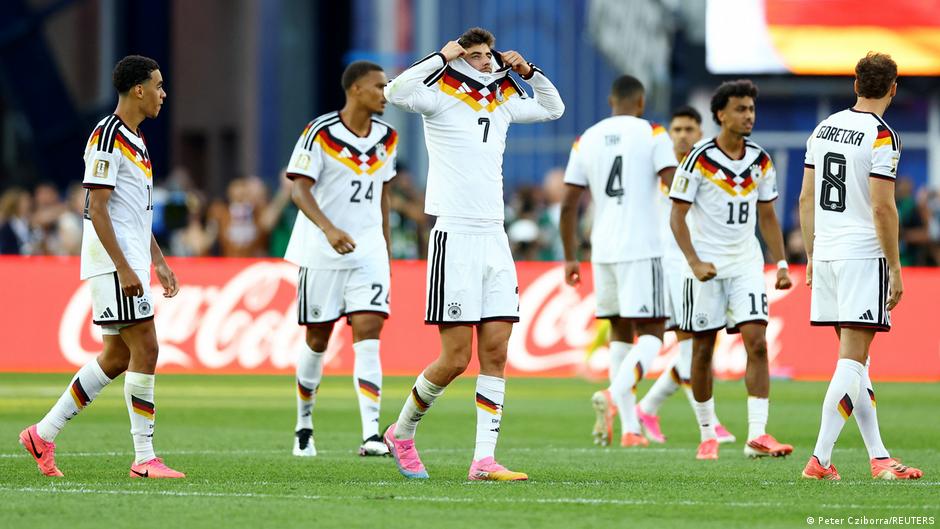
Germany, a nation historically synonymous with footballing excellence, has experienced a notable downturn in its World Cup performances, enduring three consecutive disappointing campaigns. This decline has sparked extensive debate among experts, with opinions converging on factors related not only to football strategy and player quality but also to wider societal shifts within Germany.
Identity Crisis and Player Quality Concerns
Prominent figures in German football have voiced their concerns regarding the national team's trajectory. Philipp Lahm, a decorated former captain, has pointed to a perceived lack of identity within German football. Toni Kroos, another World Cup winner, believes the country is currently short on world-class talent, while Mats Hummels has highlighted systemic issues. Frank Wormuth, a seasoned football professional with experience as a player, DFB coach-educator, and a first-division coach in the Netherlands, now a mental coach, emphasizes the critical role of player quality within any given playing philosophy.
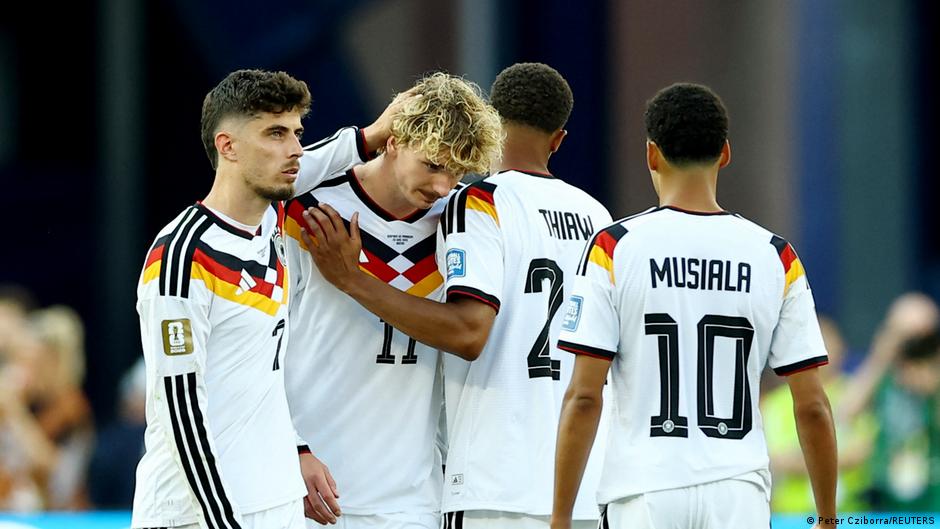
Wormuth argues, "It's not about the playing philosophy. It's about the quality of the players within that playing philosophy." He suggests that many of Germany's highly-touted young talents, such as Florian Wirtz, Jamal Musiala, and Leroy Sane, have not consistently performed at their peak. Wirtz reportedly had a less-than-ideal season, Musiala faced a lengthy injury, and Sane, according to Wormuth, "seems to remain the eternal prospect." He elaborates, "So, right off the bat, you have three very important players on the field responsible for creativity who weren’t at peak form. And that has nothing to do with [head coach Julian] Nagelsmann. It’s a matter of individual form." Wormuth also cited the example of Kai Havertz, noting his occasional goal-scoring but reliance on passes, and a crucial penalty miss. These 'little things,' he contends, cumulatively impact performance at the highest level, particularly in attack, which was once considered a German strength.
Defensively, Wormuth also sees deficiencies. He points to the injury of Nico Schlotterbeck early in a tournament as a significant setback, but questions the broader defensive capabilities. "The question is, are we really that good defensively? Just look at the other teams and how they use their bodies to challenge opponents. We don't do that anymore. I can clearly see that we have problems defensively in one-on-one situations."
Systemic Structures and Societal Influences
While recent adjustments to Germany's youth football system are still too new to fully assess their impact, discussions have turned to the development of character and mindset in young players. Mark O'Sullivan, an associate professor of football at the Norwegian School of Sport Sciences, offers the example of Norwegian club Bodo/Glimt. This club, despite its modest origins, has achieved considerable success, reaching the Champions League round of 16. O'Sullivan attributes this to the club's strong emphasis on shared values, culture, and player development, promoting principles like trust, humility, collective responsibility, and continuous improvement under coach Kjetil Knutsen.
Wormuth extends this analysis beyond football-specific structures, suggesting that societal changes are profoundly influencing the mindset of German players. "Ultimately, the reason Germany isn't successful comes down to culture, training, and youth development," he states. "The most important thing of all is mindset, and that has changed. Now you might ask, 'How?' Well, I'll tell you: Society. School. Upbringing. Parents. Culture. Things have changed." He illustrates this by contrasting Germany's approach with teams that exhibit a stronger "culture of survival," arguing that Germany has become "soft in many social situations over the last few years." Wormuth believes that while Germany develops technically skilled players, they often lack the mental fortitude seen in other footballing nations. "We develop everyone like Spanish players, but without having their mentality," he adds, underscoring the cultural dimension of the problem, which he believes cannot be easily or quickly rectified.
The Path Forward: Beyond Facilities and Coaching
The German government's pledge of €333 million ($380 million) to renovate 314 sports facilities across the country represents an investment in infrastructure. However, O'Sullivan warns against the "spatial fallacy," where the mere existence of facilities is assumed to translate into increased participation or improved performance. He stresses that meaningful engagement with sport requires more than just physical infrastructure. This perspective suggests that while facility upgrades are positive, they are only a starting point for fostering a deeper connection to sport among German youth.
The anticipated appointment of Jürgen Klopp as the new men's national team coach is another significant development. However, the prevailing sentiment is that German football has reached a pivotal moment. The decisions made in the coming years, encompassing not just coaching changes and infrastructure improvements but also a critical re-evaluation of player development, mindset, and the societal factors influencing them, will likely define the future trajectory of German football for a considerable time.