Activist Sonam Wangchuk Hospitalized as Protests Intensify
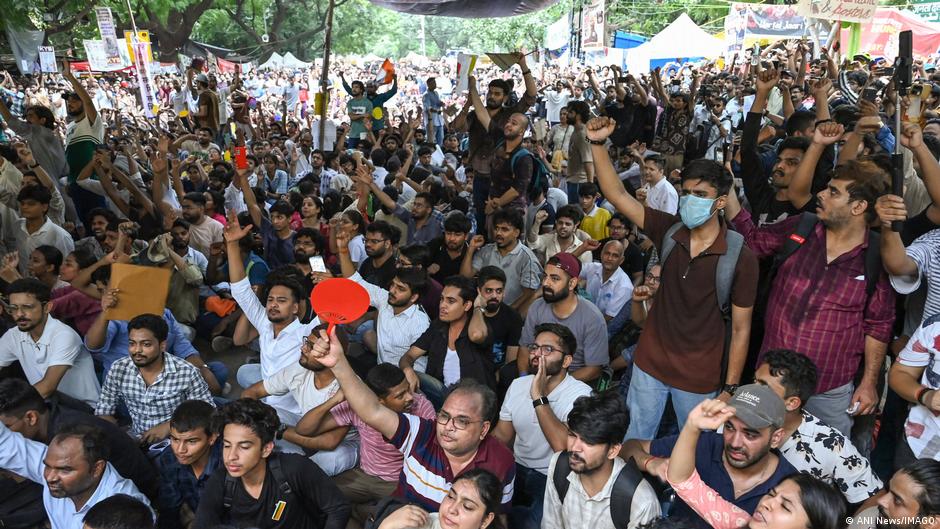
Indian activist Sonam Wangchuk was forcibly transferred to a hospital on the 21st day of his hunger strike, sparking further controversy and drawing attention to ongoing protests across India. Wangchuk had been fasting since June 28 in solidarity with students demanding accountability for exam irregularities and calling for the resignation of Education Minister Dharmendra Pradhan. His hospitalization comes amidst heightened tensions, with the Cockroach Janta Party (CJP), a key organizing body, alleging infiltration by individuals linked to the ruling Bharatiya Janata Party (BJP) and the Delhi Police, aiming to disrupt their planned march to Parliament.
The Delhi High Court, on Sunday, denied an urgent plea from Wangchuk's wife, Gitanjali Angmo, to transfer him to a private hospital. The court maintained that authorities were justified in moving Wangchuk to a government facility given his deteriorating health. A status report on his condition has been requested within three days, with the next hearing scheduled for July 24. A government lawyer informed the court that Wangchuk was taken to Safdarjung Hospital after his health declined. Angmo expressed a lack of faith in the current treatment and sought permission for a transfer to a hospital of the family's choice, alleging that police presence at the hospital restricted their movement and amounted to 'illegal detention'. She also raised concerns about discrepancies in Wangchuk's potassium level reporting.
CJP Alleges Infiltration and Warns Against Provocation
The Cockroach Janta Party (CJP) made a significant claim on Sunday, stating that 30-40 individuals affiliated with Prime Minister Narendra Modi's BJP and the Delhi Police had infiltrated their protest. The CJP alleged that these individuals intended to make provocative statements to destabilize the demonstration. Through a post on X (formerly Twitter), the group urged its supporters to identify and distance themselves from these 'goons', emphasizing that they were not genuine supporters of CJP or Sonam Wangchuk. Furthermore, CJP reported a substantial build-up of police and Rapid Action Force (RAF) personnel at the protest site, complete with multiple police vehicles and detention buses, and claimed that tear gas launchers were prepared for deployment.
Despite these concerns, the CJP affirmed its commitment to non-violence during the upcoming July 20 march to Parliament. The organization explicitly instructed participants to adhere to strict non-violent principles, stating, "No matter the provocation, we will not raise our hands." This directive echoes historical non-violent movements in India, such as Mahatma Gandhi's Dandi March.
Police Deny Permission for Parliament March
The Delhi Police stated on Sunday that the CJP had not secured official permission to continue their demonstration at Jantar Mantar, nor had they obtained approval for the planned march to Parliament on Monday, July 20. According to reports, the police cited prohibitory orders in effect around the Parliament area due to the commencement of the Monsoon Session, rendering the march impermissible. CJP founder Abhijeet Dipke and activist Sonam Wangchuk had called upon supporters to participate in the march, which aims to protest student deaths by suicide linked to exam irregularities and demand the Education Minister's resignation.
Wider Protests and Political Reactions
Beyond Delhi, other protests have also garnered attention. In central Madhya Pradesh state, police dispersed a 15-day protest by villagers demonstrating against a planned project to transfer water from the Ken River to the Betwa River and other development initiatives. Led primarily by tribal women, the protest highlighted alleged irregularities in land acquisition, rehabilitation efforts, environmental safeguards, and project implementation. Media reports indicated that police detained activist Amit Bhatnagar, who had been on a hunger strike for 11 days, along with several other demonstrators.
Conversely, in northern Uttarakhand state, public protests proved effective. The government relented and suspended the felling of over 4,000 trees for a road widening project in Dehradun city after massive public outcry.
The forced hospitalization of Sonam Wangchuk has elicited strong reactions from opposition political leaders. Rahul Gandhi of the Congress party criticized the move as 'wrong' and highlighted issues of paper leaks, rising education costs, and student suicides. Mallikarjun Kharge, President of the Congress party, labeled Wangchuk's removal as 'yet another black stain on democracy and the Constitution'. Mamata Banerjee of the Trinamool Congress (TMC) emphasized that public trust cannot be gained by suppressing peaceful protests. Other leaders, including Mahua Moitra, Anish Gawande, Arvind Kejriwal, Atishi, and Chandrashekhar Azad, also condemned the incident, with some calling it 'illegal detention' and urging public action. Notably, Prime Minister Narendra Modi and Union Home Minister Amit Shah have not issued statements regarding the incident.
Source: India news: 'Cockroach' party warns of protest infiltrators