The Resurgence of US Train Travel Amidst Infrastructure Challenges
In recent years, an increasing number of Americans have begun to re-evaluate train travel as an alternative to rising airfares and fluctuating gasoline prices. This renewed interest has led to record-breaking passenger numbers over the past two years, signaling a potential shift in travel preferences. However, individuals accustomed to the advanced rail systems found in many European and East Asian nations often encounter a stark reality upon engaging with the US network: a system largely optimized for freight transport rather than high-speed passenger service. This presents a paradox, given that the United States possesses the most extensive railroad network globally.
Historical Trajectories: Freight Over Passengers
The mid-to-late 19th century represented a golden age for rail travel in the US, characterized by the rapid expansion of tracks connecting the nation and facilitating both goods and human transit. This era, however, was relatively short-lived. By the mid-20th century, federal investment priorities shifted significantly, channeling resources into the development of highways and airports. This strategic pivot rendered automobile and air travel far more efficient and accessible, effectively sidelining passenger rail.
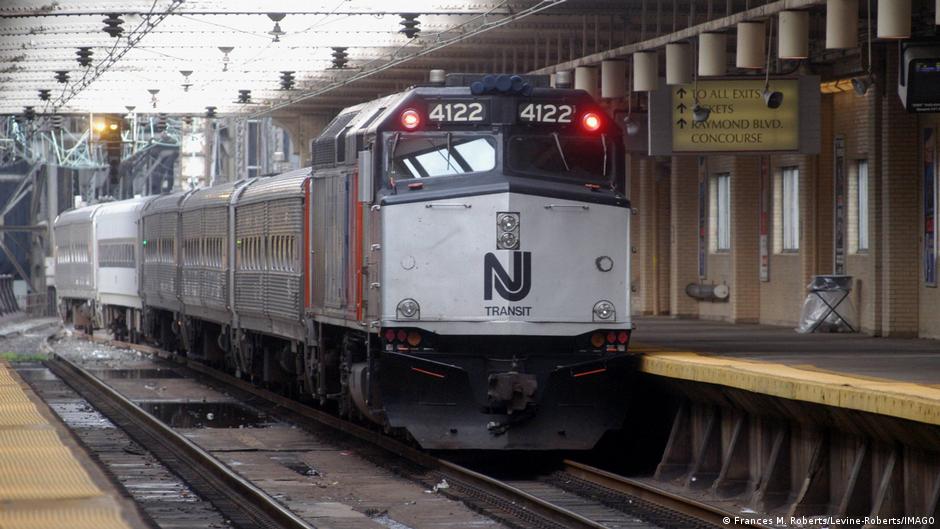
Unlike many European countries, which have historically viewed passenger rail as a vital public service and invested accordingly, the US adopted a model that prioritized the more lucrative freight sector. This historical decision has left an enduring legacy, with much of the current rail infrastructure designed to accommodate heavy goods rather than the rapid, smooth movement of passenger trains. A prime example is Amtrak's Northeast Corridor, its most popular route, which spans approximately 457 miles between Boston and Washington D.C. This journey typically takes around seven hours. In contrast, a slightly longer route between Napoli and Milan in Italy can be completed in just under five hours by high-speed rail.
Allan Zarembski, director of the University of Delaware's railroad engineering and safety program, points out that the existing curvature of the Northeast Corridor's tracks, which conform to the natural landscape, is a significant impediment to high-speed operations. Rectifying this issue would entail substantial costs and logistical hurdles. "Straightening out the track is a very expensive proposition," Zarembski explains. "I have to acquire the land. The land is owned by somebody, and often that somebody doesn't want to sell it. … We're talking about going through the most densely populated portion of the United States."
California's High-Speed Rail Ambitions: A Cautionary Tale
While the Northeast Corridor faces inherent challenges, California embarked on an ambitious project in 2008 to establish a high-speed rail link between Los Angeles and San Francisco. Envisioned as a transformative upgrade, the plan aimed to reduce the travel time between the two major cities to under three hours, a significant improvement over the existing 12-hour, non-direct route. The initial projection slated the 800-mile line for completion by 2020.
However, the project has been plagued by delays and cost overruns, earning it the moniker, "California's 'train to nowhere'." Initially budgeted at $33 billion with an appropriation of $9.95 billion, development costs have since escalated dramatically, now projected to exceed $100 billion. Zarembski suggests that the initial estimates were deliberately understated for political expediency. "I think they lowballed it for political purposes," he asserts. "They knew they would never get the highball price through the legislative process."
Further complicating matters, the project has encountered resistance from local communities concerned about the railway's impact on their neighborhoods. While the state continues to seek investment, a smaller section of the route is currently under construction, with an anticipated opening in the early 2030s. The full San Francisco to Northern California connection is now not expected until 2038, nearly two decades beyond the original target.
The Environmental and Economic Case for Rail Investment
Beyond passenger convenience, a transition to high-speed rail offers substantial environmental benefits. Amtrak reports that its electric trains produce significantly fewer emissions than planes and cars, specifically 72% less than aircraft and 83% less than automobiles. Despite these advantages, the transformation of the US passenger rail system into a faster, more efficient network demands considerable financial investment.
Recent federal approaches to rail funding have been inconsistent. While previous administrations invested substantially in Amtrak, the Trump administration proposed significant cuts to federal funding for passenger rail infrastructure, including an 82% reduction in its 2027 fiscal year budget. Amtrak estimates that modernizing just the Northeast Corridor, including signal system upgrades, bridge and tunnel reconstruction, and fleet modernization, would require over $100 billion and more than 15 years.
Alon Levy, a transportation and land use fellow at New York University's Marron Institute, offers a contrasting perspective, suggesting that necessary improvements could be achieved with considerably less investment. Levy co-authored a report indicating that a high-speed rail system in the Northeast Corridor could be built for approximately $17 billion beyond existing commitments. He argues that the Northeast Corridor already possesses a relatively high standard of infrastructure for much of its length. Instead of a complete overhaul, Levy advocates for adopting technical and operational standards, as well as proven rail technologies, from Europe and Asia.
Levy attributes the US's reluctance to embrace such innovations to a cultural mindset. "It's kind of an American mindset, where if you're not the first at something, it's really difficult to learn how to be second or third," he observes. "If something is invented in Japan, it can make its way to Europe. It is very difficult to make its way to America, even when they are aware that they are behind." The path forward for US passenger rail appears to hinge on a re-evaluation of investment priorities, a willingness to learn from international successes, and a commitment to overcoming the legacy of freight dominance.