Frida Kahlo's Enduring Legacy: Beyond the Canvas
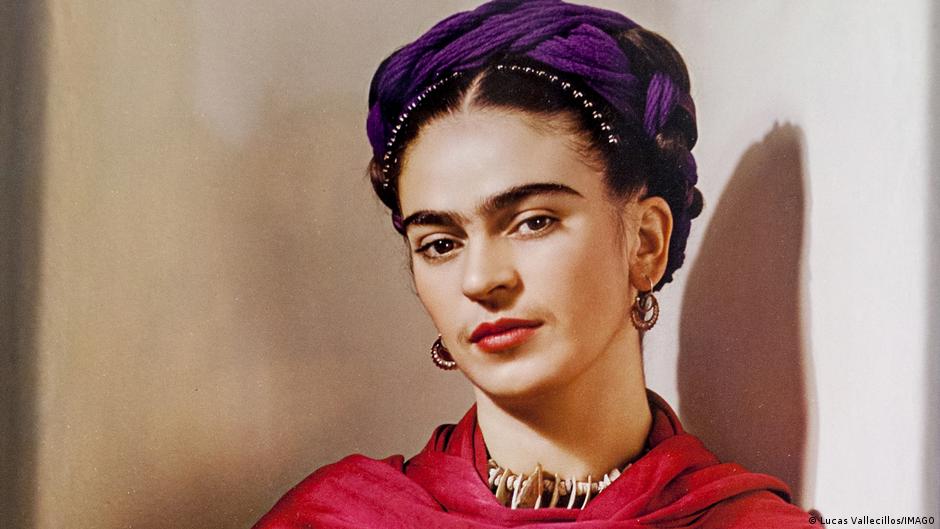
Frida Kahlo, the iconic Mexican painter, remains a towering figure in art history, her image and work instantly recognizable worldwide. More than seven decades after her death in 1954, Kahlo's ability to transform profound personal suffering into a compelling visual narrative continues to resonate with audiences globally. Her distinctive self-portraits, often featuring her signature unibrow and vibrant flower crowns, have cemented her status as an enduring cultural icon. This sustained interest is underscored by a major new exhibition, "Frida: The Making of an Icon," opening at London's Tate Modern on June 25 and running until January 3, 2027.
Born in 1907 in Coyoacán, a district now integrated into Mexico City, Kahlo's early life was marked by significant physical challenges. She contracted polio as a child, and at 18, a severe bus accident left her with permanent injuries, derailing her aspirations of becoming a doctor. It was during her prolonged recovery, confined to bed, that she discovered her passion for painting, utilizing a specially adapted easel and a mirror positioned above her.
Art as a Mirror: Unflinching Self-Portraits
Kahlo's artistic output is predominantly composed of striking self-portraits. However, unlike many artists who idealize their subjects, Kahlo used her self-depictions as a canvas for brutal honesty. These works unflinchingly explored themes rarely depicted in art of her era, particularly from a woman's perspective: her disability, the anguish of miscarriages, and the depths of heartbreak. This raw authenticity is a cornerstone of her enduring appeal.
Despite common associations, Kahlo herself rejected the label of Surrealism. She famously stated, "I never painted dreams. I painted my own reality." And her reality was undeniably rich and complex. Her tumultuous marriage to Diego Rivera, a renowned Mexican artist 20 years her senior, was a significant aspect of her life. While Kahlo was often overshadowed by Rivera's fame during her lifetime, it is her legacy that has unequivocally transcended time. Her image and artwork are ubiquitous, appearing from social media feeds to museum galleries, a phenomenon often dubbed "Fridamania." The market value of her work reflects this immense popularity; in 2021, her painting "Diego y yo" (Diego and I) fetched an astonishing $35 million (€31 million) at auction. This piece notably depicts Rivera as a third eye on Kahlo's forehead, symbolizing their intense and often painful connection. Their passionate yet tumultuous relationship, characterized by both profound suffering and a strong intellectual bond, lasted until Kahlo's death.
Another significant sale occurred in 2025, when Kahlo's "El Sueño" (The Dream) set a new record, selling for $54.7 million, making it the most expensive artwork by a woman ever sold at auction. This painting portrays Kahlo asleep in bed, covered in vines, likely a metaphor for her chronic pain, with a skeleton holding dynamite hovering above her.
Defying Conventions: Gender Roles and Identity
Kahlo was a trailblazer in her defiance of conventional gender roles, a quality that continues to resonate powerfully with the LGBTQ+ community today. She was openly bisexual and engaged in affairs with both men and women during her marriage to Rivera. Her art often reflected this fluidity; in her 1940 work "Self-Portrait with Cropped Hair," she depicts herself in a loose-fitting men's jacket with short hair. Furthermore, she consistently challenged traditional beauty standards by prominently featuring her signature unibrow and visible mustache in her self-portraits. These details are integral to her strikingly frank artistic oeuvre, contributing to the consistent draw of her exhibitions in museums globally. The upcoming Tate Modern show is set to feature over 30 of her most iconic works, aiming to explore her "many selves" – including her roles as a devoted wife, an intellectual, a modern artist, and a political activist.
The Rise of a Global Icon
Frida Kahlo was not always the globally recognized figure she is today. The publication of Hayden Herrera's 1983 biography, "Frida: A Biography of Frida Kahlo," was instrumental in transitioning Kahlo from an artist primarily known in academic circles to a public figure of international renown. This book also served as the foundation for the critically acclaimed 2002 film "Frida," starring Salma Hayek.
However, Kahlo's widespread commercialization, with her image adorning everything from coffee mugs to T-shirts, has drawn criticism. Some argue that this marketable persona often overshadows her profound political convictions and the nuanced complexities of her art. Kahlo was a staunch communist, deeply engaged with the political upheavals of her time, and maintained connections with prominent left-wing figures, including the exiled Russian revolutionary Leon Trotsky.
Today, Kahlo remains Mexico's most celebrated artist. Her work is replete with traditional Tehuana dresses, Indigenous symbolism, and references to the Mexican landscape. While she championed Indigenous cultures, her relationship with Indigenous identity was complex, as noted by biographer Herrera. Despite her upper-class intellectual background, she strategically employed Indigenous imagery to construct her artistic persona and articulate ideas about Mexican identity, femininity, and politics.
These discussions, however, have not diminished Kahlo's broader legacy. "Fridamania" shows no signs of abating. Her formidable personality, her extraordinary life experiences, and her unparalleled ability to convey raw emotion through her art have collectively ensured her enduring place in the pantheon of global artistic icons.
Source: More than a unibrow: The enduring appeal of Frida Kahlo