Germany's Hambach Forest: A Victory for Conservation
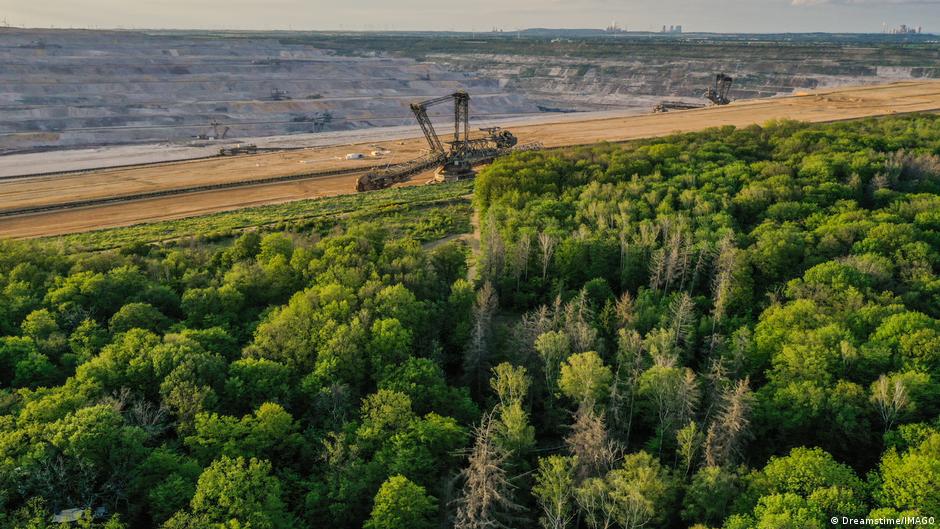
In a significant development for environmental conservation, Germany has officially declared the remaining 14% of the 12,000-year-old Hambach Forest a permanent nature conservation area. This decision marks the culmination of a half-century-long struggle by local residents and environmental activists to safeguard the woodland, situated between Aachen and Cologne, from the expansion of an open-pit lignite coal mine. The battle saw protesters, including those living in treehouses, actively resisting the mine's encroachment, highlighting a sustained commitment to preserving natural heritage.
Dirk Jansen of BUND, the German branch of the Friends of the Earth environmental group, described the outcome as a triumph for the climate movement, reflecting decades of advocacy. The conflict intensified over the years, reaching a critical point in October 2018 when over 50,000 protesters gathered in the forest, coinciding with a court order secured by Friends of the Earth Germany that halted further clearing. This widespread public and legal pressure contributed to a recommendation in 2019 by Germany's Coal Commission—comprising diverse stakeholders including energy companies, unions, NGOs, and citizens—to protect Hambach and initiate a national coal phase-out by 2038. The Hambach mine itself is slated to cease operations by 2029, with the recent agreement between the government and energy company RWE solidifying the forest's protected status.
Looking ahead, the protected area of Hambach Forest is set to become a publicly managed wilderness development zone from 2035. Plans include creating two ecological corridors to connect it with neighboring woodlands, aiming to restore the region's biodiversity. Additionally, a new cycle and pedestrian path will be constructed to allow public access. Jansen emphasized that this agreement ensures no further trees will be felled and no roads will be constructed through the remaining forest, securing an ecological future for the entire region.
United States: Policies Favoring Resource Extraction on Public Lands
In stark contrast to Germany's conservation efforts, the United States, particularly under the Trump administration, has pursued policies that facilitate increased oil and gas extraction, mining, and private development on public lands. Lincoln Larson, a researcher of outdoor recreation and public lands at North Carolina State University, noted this aggressive shift away from conservation. Public lands in the U.S. encompass approximately 640 million acres, or about 30% of the country, ranging from iconic national parks like Yosemite and Yellowstone to national forests and wildlife refuges.
Historically, the 1906 Antiquities Act has enabled presidents to designate lands for protection. However, the Trump administration has been characterized by efforts to reverse this trend, reducing the extent of protected areas and opening them up for commercial exploitation. Larson highlighted that previous presidents consistently utilized the Act to expand protected areas, making Trump's approach of actively reducing them unprecedented. Examples include opening 500,000 square miles of protected Pacific Ocean waters for commercial fishing in June, and the implementation of the 'One Big Beautiful Bill' to expedite the leasing of public lands for oil and gas development. Furthermore, the US Forest Service aimed to increase timber sales by 25% over four to five years, indicating a broader push for expanded resource extraction.
Far-Reaching Consequences of Land Use Policies
The implications of these divergent land use policies extend beyond immediate environmental impacts. The most evident consequence is on the global climate. The lignite coal extracted from mines like Hambach is a significant contributor to greenhouse gas emissions. The continued reliance on fossil fuel extraction exacerbates global temperature increases, leading to more frequent and intense extreme weather events, droughts, and floods worldwide.
Public lands also play a crucial role in watershed management. In the Western United States, national forests, despite comprising only about 20% of the total land area, contribute nearly half of the surface water supply, which is vital for downstream communities. The degradation of these areas through development can compromise essential water resources. Biodiversity is another critical concern; ecosystems like forests, wetlands, and marine protected areas maintain a delicate balance. Deforestation or overfishing can disrupt these systems, leading to biodiversity loss, which in turn can affect global food supply chains and contribute to resource scarcity, potentially impacting political stability. The United Kingdom, for instance, has acknowledged that dwindling global biodiversity poses significant national security implications.
Community Engagement and Economic Impacts
Community attachment to natural landscapes often fuels the fight for their protection. This is particularly true for Indigenous communities in the U.S., who frequently lead resistance against oil and gas extraction on lands with cultural significance. In Alaska, where a large proportion of Indigenous peoples reside, many communities oppose drilling due to their reliance on traditional hunting and fishing for subsistence. Surveys indicate broad public opposition to the closure or sale of national public lands, underscoring a widespread appreciation for these areas. U.S. national parks, often celebrated as 'America's best idea,' recorded 331.9 million visitors in 2024, reflecting their popularity and the public's desire to access them.
Beyond intrinsic value, public lands hold substantial economic importance. The outdoor recreation industry in the U.S. supports a $1.2 trillion economy and 5 million jobs. In many regions, public lands are magnets for tourism, sustaining local businesses and economies. The contrasting approaches in Germany and the U.S. highlight different priorities regarding environmental protection versus economic development through resource extraction, with profound implications for climate, biodiversity, and societal well-being.
Source: Germany saves forest from mining, US opens land to drilling