
Germany Considers Restricting Information Access Amidst Security Concerns
The German government is currently considering significant amendments to its Freedom of Information Act (IFG), a move that has ignited a debate about transparency and public access to government data. The proposed changes, part of a broader reform package, have been met with strong opposition from a wide array of civil society groups, media organizations, and political figures who fear a rollback of hard-won civil liberties.
Introduced in 2006, the IFG grants individuals the right to access official information held by federal agencies. This legislation has been instrumental for journalists, environmental organizations, and consumer protection groups, enabling them to request and obtain data and materials from government bodies, often free of charge. Exceptions to this access have primarily been limited to sensitive security-related information, such as that handled by intelligence agencies.
Government Cites Security Threats for Proposed Changes
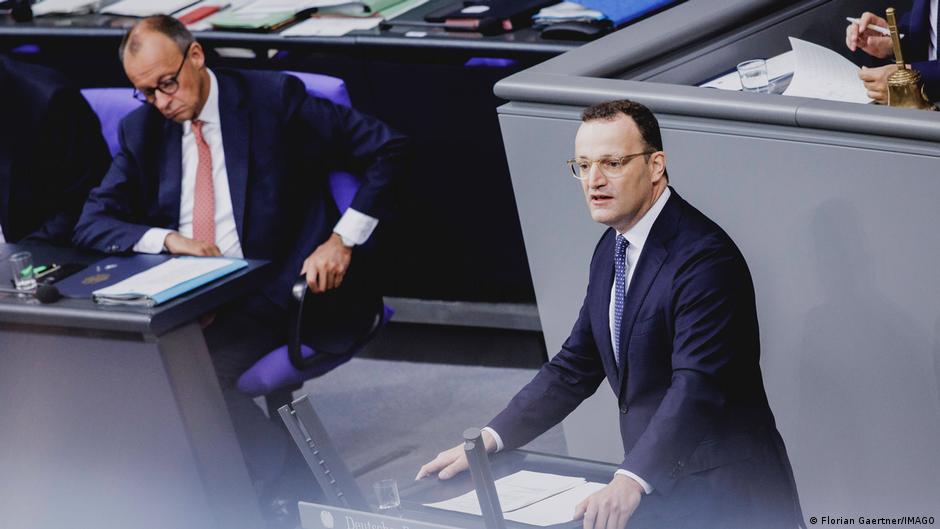
The ruling coalition, comprising the conservative Christian Democratic Union (CDU)/Christian Social Union (CSU) and the center-left Social Democratic Party (SPD), argues that the current geopolitical landscape, characterized by global cyber warfare and frequent hacker attacks, necessitates a reevaluation of how government information is handled. Chancellor Friedrich Merz and Interior Minister Alexander Dobrindt have been prominent voices advocating for these reforms. A 34-point reform paper outlines the government's rationale, emphasizing the need to protect government data during "times of highly complex threats, both domestic and foreign."
Among the most contentious proposed changes is the potential restriction of information requests to "natural persons" only, effectively excluding associations and organizations from submitting inquiries. This would significantly impact advocacy groups and non-governmental organizations (NGOs) that rely on the IFG for their work. Furthermore, the government plans suggest a substantial increase in fees for information requests, which are currently either free or subject to minimal charges. There is also a proposal to redact the names of government employees in official documents to protect them from potential hostility or threats.
Concerns Over Citizenship-Based Restrictions and Scope of Information
Another highly debated aspect of the reform is the government's intention to explore the legality of limiting information access rights to "German citizens and EU citizens living in Germany." This could exclude non-EU citizens from accessing information, a move critics argue would be discriminatory and further reduce transparency. Additionally, the proposal suggests that information concerning critical infrastructure, counterintelligence, and counterterrorism should be handled with increased confidentiality.
Konstantin von Notz, a lawmaker from the opposition Green Party and a member of the Parliamentary Oversight Panel for intelligence services, expressed strong disapproval of the proposed changes. He stated that under the guise of adapting to new security threats, the government is "fundamentally undermining the legal foundations of government transparency." Von Notz characterized the reforms as a "drastic step backward from hard-won civil rights," contradicting the coalition's promise to modernize the state.
Widespread Opposition from Civil Society
The proposed amendments have galvanized a broad coalition of civil society organizations. An open letter, signed by 110 groups including Greenpeace, Transparency International, and Amnesty International, urgently called on the government to abandon its plans. The letter asserts that "Anyone who limits the right to access information to individual cases, subjects it to mandatory justification, excludes organizations and raises fees — without warning — to exorbitant levels is effectively abolishing freedom of information."
Martin Kaiser, a climate expert with Greenpeace, highlighted the potential negative impact on public oversight and participation. He warned that curtailing information rights would hinder accountability regarding infrastructure, land use, species conservation, and climate protection, ultimately eroding public trust. The intensity of this criticism has prompted some members of the ruling coalition within the Bundestag to reconsider the planned reforms. Experts from the SPD's parliamentary committees on the Interior, Digital Affairs, and Consumer Protection issued a joint statement, asserting that "Any curtailment of the existing rights of citizens, the press and civil society to access information must not be allowed to proceed." They pledged that the SPD parliamentary group would not approve any measure that diminishes the current level of transparency provided by the Freedom of Information Act.
Prevalence of Information Requests
Official data underscore the importance of the existing IFG. Between 2015 and 2022, approximately 105,000 requests were submitted to German authorities. While information was partially withheld in about 16,200 cases and entirely denied in around 9,000, the vast majority of requests resulted in the disclosure of information. Critics fear that the proposed reforms could reverse this trend, significantly reducing the public's ability to scrutinize government actions and decisions.
Source: Original Article