From Regional Leader to Global Diplomat: Andy Burnham's New Role
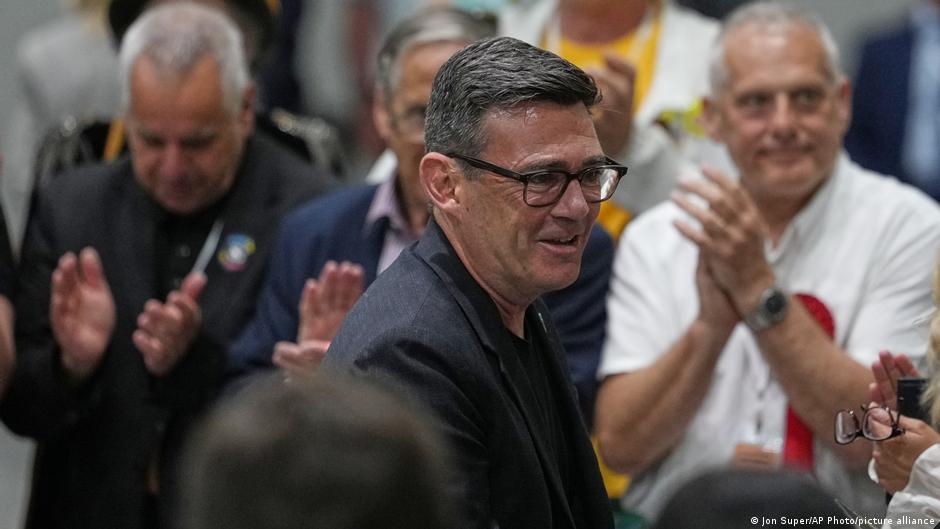
Andy Burnham, a well-known figure from northwest England, is set to assume the office of Prime Minister, marking a significant shift from his previous role as Mayor of Manchester. His tenure in Manchester, often earning him the moniker 'King of the North,' saw the local economy outpace the national average and a reduction in poverty within inner-city areas. Known for his accessible persona, frequently seen in casual attire, Burnham's relaxed demeanor and sharp wit have garnered him considerable popularity, particularly across northern England. This popularity was underscored by his recent landslide victory in a parliamentary by-election, securing his seat in the House of Commons. His appointment as Labour Party leader now paves his way to Downing Street, succeeding Keir Starmer after two years. The widespread support he enjoys among Labour MPs reflects hopes that he can counter the growing influence of Nigel Farage's Reform UK party.
As Burnham steps onto the national and international stage, he confronts a new chapter where foreign policy, a less prominent aspect of his prior career, will demand immediate attention. The transition requires him to rapidly establish himself as a credible international figure. A recent dismissive comment from US President Donald Trump, who admitted not knowing Burnham and referred to him as the 'mayor of a small city,' highlights the immediate need for the new Prime Minister to define his international presence amidst a complex array of foreign policy challenges.
Maintaining Alliances Amidst Shifting Geopolitical Sands
The United Kingdom's relationship with the United States remains a cornerstone of its foreign policy, reinforced by intelligence-sharing agreements such as the Five Eyes alliance. This partnership is particularly critical for Britain's service-based economy and national security. As Mihir Sharma of the London-based Institute for Public Policy Research (IPPR) observes, the US is an indispensable partner. Therefore, any potential conflict with the Trump administration would carry significant risks for the UK. Under the previous Starmer administration, relations with Trump had shown signs of strain, particularly after London's initial reluctance to permit the use of British military bases for US strikes on Iran. Trump's subsequent criticism of Starmer, suggesting he was 'no Winston Churchill,' underscored these tensions.
However, Burnham may signal a new direction on the Middle East. He has publicly committed to increasing pressure on the Israeli government, advocating for tougher sanctions and a ban on trade in goods from what he terms 'illegal settlements.' He has also offered an apology for Britain's initial support of Israel's military campaign in Gaza. In a recent article for The Times, Burnham reaffirmed Britain's dedication to its leadership role and the preservation of its existing alliances. He explicitly linked Britain's security to that of Ukraine, suggesting that President Volodymyr Zelenskyy can anticipate continued robust support from his administration, echoing the commitment shown by Starmer. Starmer had played a significant role in Europe's 'coalition of the willing,' alongside France and Germany. Furthermore, Burnham has pledged to uphold Britain's nuclear deterrent. The composition of his foreign policy team is still uncertain, though National Security Adviser Jonathan Powell, known for his diplomatic experience and strong connections in Washington and Kyiv, is expected to retain his position, which would be a strategic advantage for Burnham.
Re-evaluating European Relations and Future Prospects
One of the most significant questions facing Burnham's foreign policy agenda concerns Britain's relationship with the European Union. It remains unclear whether he will continue his predecessor's largely pro-European stance. At a Labour Party conference last year, Burnham expressed a long-term aspiration for Britain to rejoin the EU 'within my lifetime.' Under Starmer, relations with the EU saw notable improvements, leading many pro-Europeans to hope for even greater rapprochement under Burnham.
However, Anand Menon, a Europe expert at King's College London, offers a more cautious perspective. He speculates that Burnham might prioritize a 'reset' with the EU less, perceiving it as an endeavor that currently demands substantial political effort with relatively limited immediate returns. Despite this, Menon does not rule out the possibility of closer ties in the longer term. He suggests that with a significant decline in migration to Britain in recent years, London could eventually consider accepting limited immigration from the EU once more. Such a development, he argues, could facilitate closer economic cooperation with Brussels, potentially aiding in the revitalization of Britain's economy.
Potential for a European Security Pact
Mihir Sharma proposes that Burnham could explore an ambitious European security pact. Such a pact, Sharma suggests, could encompass military cooperation, the establishment of clean technology supply chains, and collaboration on artificial intelligence. Sharma emphasizes Britain's status as a major military power, arguing that European security would be enhanced if the country participated more actively in defense projects and contributed to safeguarding Europe's industrial base. He further suggests that Burnham should seek new partners within the EU, identifying countries like the Nordic nations or Poland as potentially more receptive to closer defense cooperation than France or Germany.
As of now, concrete indications regarding the new Prime Minister's specific strategies for shaping Britain's global relations are limited. Burnham's transition to this new role represents a significant departure from his previous experience. While pragmatism, approachability, and political instinct served him well in Manchester, the international stage presents a far more complex and demanding environment where these qualities alone may not suffice.
Source: Original Article