Judicial Outcome and Broader Implications
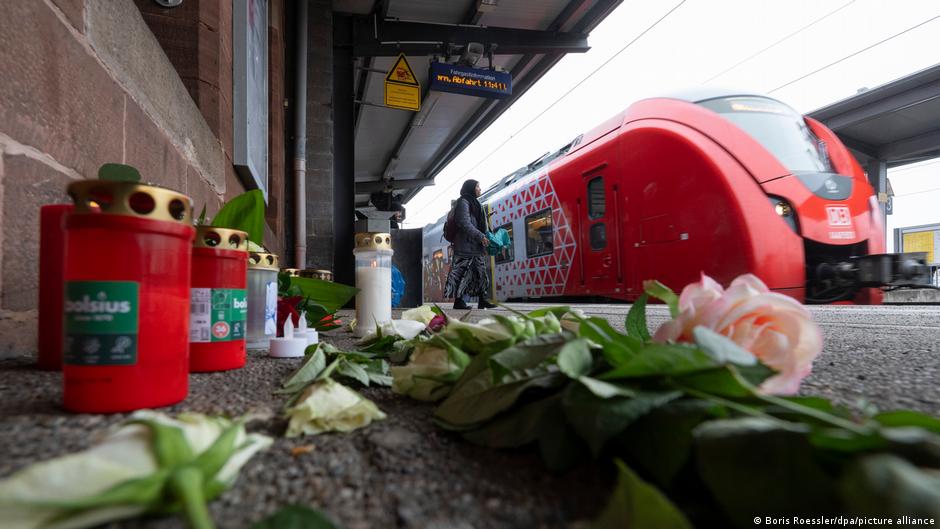
In a recent legal proceeding, the Zweibrücken Regional Court delivered a verdict in a case involving the fatal assault of a train conductor. The defendant received a 10-year prison sentence after being found guilty of assault resulting in death. This incident, which occurred in February, saw 36-year-old conductor Serkan Calar fatally injured during a routine ticket inspection on a regional train in Rhineland-Palatinate. The 24-year-old perpetrator, traveling without a valid ticket, reportedly refused to provide identification. When Calar requested his departure from the train and made slight physical contact, the defendant responded with a forceful blow to the conductor's head, leading to a brain hemorrhage that proved fatal two days later.
Surveillance footage from the train was presented as evidence during the trial. The victim's family, through their attorney Yalcin Tekinoglu, expressed dissatisfaction with the perceived leniency of the sentence and indicated their intention to seek a review by the Federal Court of Justice. Tekinoglu clarified that the family's primary goal extends beyond securing a harsher penalty; they seek a judgment that unequivocally condemns the growing aggression directed at public transport personnel, aiming to establish a deterrent against such acts.
A Widespread Phenomenon: Statistics and Expert Analysis
Testimony from a Federal Police member during the trial underscored the commonplace nature of such incidents. The officer recounted that the defendant had been removed from a high-speed train earlier the same day due to "verbally aggressive behavior," describing it as a routine occurrence. The Federal Police bears significant responsibility for railway security in Germany.
Recent data from the Interior Ministry further corroborates this concerning trend. Figures reveal that threats and assaults against railway employees and Federal Police officers are increasingly prevalent across Germany. In the initial five months of the current year alone, 1,630 railway staff members and 4,672 federal police officers were victims of criminal offenses. This represents a notable increase; while last year saw an average of five physical attacks on railway employees daily, that number has escalated to eight per day this year.
Leon Walter, a violence researcher at Bielefeld University, offered insights into the origins of this aggression, particularly within the context of train environments. He noted that these trends align with observations from other front-line sectors, including healthcare, firefighting, and law enforcement, all of whom report a rise in hostile encounters. Walter characterizes this as a societal phenomenon, attributing it to elevated stress levels experienced by many individuals in their daily lives. For some, he suggests, violence becomes "a last resort."
The enclosed nature of a train environment can exacerbate tensions during situations like ticket inspections, creating what Walter describes as a "perfect storm." Individuals prone to aggressive behavior, when confronted without a valid ticket, may feel trapped and unable to escape the situation, occasionally leading to violent outbursts. Furthermore, train conductors often become targets for passengers' frustrations stemming from increasing delays on the Deutsche Bahn network, making them "the most accessible target."
Responses and Proposed Solutions
The escalating aggression is posing significant challenges for Deutsche Bahn in recruiting and retaining train crew members. Walter highlighted that many employees are contemplating alternative careers due to workplace violence, citing a perceived lack of adequate support in managing such situations as a major contributing factor.
In response to the fatal incident, Evelyn Palla, head of Deutsche Bahn, has implemented measures to enhance employee safety. Customer-facing staff can now opt to be equipped with body cameras attached to their uniforms. Previously limited to regional trains, this initiative has been expanded to include long-distance services, encompassing train attendants, on-board restaurant staff, and personnel at DB Lounges in stations. Deutsche Bahn states that body cameras possess a "preventive effect and serve to deter and reduce acts of violence as well as to preserve evidence." This forms part of a broader "Action Plan for Greater Safety on the Rails," which also includes the recruitment of 200 additional security personnel and the refinement of an emergency button system, enabling employees to discreetly alert control centers during dangerous situations.
Walter emphasizes the critical role of staff training in de-escalation. He stresses that the conduct of train attendants in conflict situations is paramount, specifically advising that "a passenger should never be touched or restrained." He also advocates for giving conductors the autonomy to decline ticket checks if they perceive a situation is likely to escalate. "Our research shows that many believe they have to go through with it regardless of the consequences," Walter stated, urging employers and lawmakers to establish regulations that prioritize safety above all else.