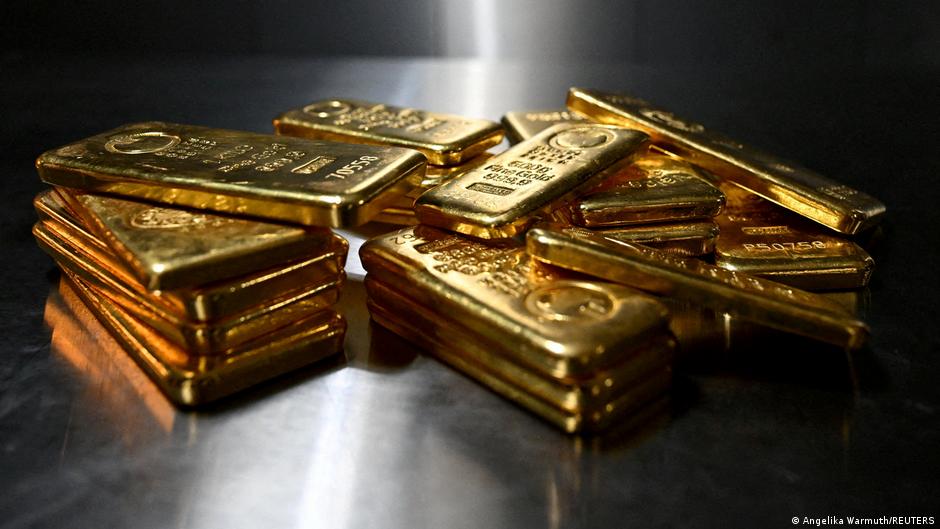
The Enduring Appeal of Gold in Turbulent Times
In an era characterized by economic instability and geopolitical flux, gold has once again emerged as a prominent asset for investors seeking to safeguard their wealth. The precious metal's price has experienced a remarkable surge over the past few years, with some analysts predicting that this upward trajectory is set to continue, potentially leading to a doubling of its value within the next five years. This phenomenon underscores gold's traditional role as a reliable store of value when other investment avenues appear less secure.
Since 2020, the price of gold has escalated from approximately $1,585 per ounce to over $4,500 per ounce, demonstrating a consistent upward trend despite occasional market fluctuations. This sustained growth is largely attributed to investors' desire to protect their capital from inflationary pressures and the diminishing returns offered by conventional interest-bearing investments, particularly in a landscape of relatively low central bank interest rates. Consequently, a growing number of individuals and institutions are turning to precious metals as a secure repository for their assets, thereby fueling increased demand and, in turn, higher prices.
Key Drivers Behind Gold's Recent Rally
Several significant factors are contributing to the current robust performance of gold. Economists at Deutsche Bank highlight a notable trend of central banks globally augmenting their gold reserves. A study published in April indicated that nations such as China, Russia, India, and Turkey, alongside various emerging market central banks, are actively increasing their gold holdings. This institutional demand is a powerful force, with Deutsche Bank analysts projecting gold could reach $8,000 per ounce by 2031, effectively doubling its present value.
Frank Schallenberger of Landesbank Baden-Württemberg (LBBW) points to a confluence of factors, including expectations of interest rate reductions, a weakening US dollar, and robust demand for physical gold in the form of coins and bars. He also identifies a relatively new, yet increasingly influential, market participant: cryptocurrencies. Schallenberger notes that cryptocurrency investors are diversifying their portfolios by acquiring gold, suggesting that this emerging source of demand could provide additional impetus for gold prices.
Michael Hsueh, a precious metals analyst at Deutsche Bank Research, categorizes buyers into 'inelastic' and 'elastic' groups. He observes that steady, inelastic buyers, such as central banks, have largely displaced more price-sensitive 'elastic' customers, including private jewelry purchasers. This consistent, less price-sensitive demand has been a crucial element in gold's strength between 2021 and 2025.
Another fundamental driver, as articulated by Thomas Kulp, a research analyst at DZ BANK, is the escalating geopolitical uncertainty worldwide. Gold's dual appeal as a 'safe haven' and a symbol of independence has significantly bolstered demand during these volatile periods.
Gold's Role as a 'Safe Haven': A Nuanced Perspective
Gold has long been revered as a dependable mechanism for preserving wealth. While it does not generate inherent returns and is susceptible to speculative influences, it is generally considered a more secure option than holding cash. However, experts offer varied perspectives on the extent of its 'safe haven' capabilities.
Schallenberger cautions against overstating gold's safe-haven reputation, suggesting that holding excessive amounts is not advisable. Nevertheless, he acknowledges its utility as a hedge, recommending a five to ten percent allocation of gold within a portfolio to mitigate volatility.
In contrast, Hsueh of Deutsche Bank Research advocates for holding gold on a larger scale as a store of value. He posits that the primary motivations for reserve managers, particularly at central banks, to incorporate gold into their portfolios include diversification, protection against geopolitical risks, and a hedge against inflation.
Kulp of DZ Bank largely concurs with gold's stabilizing properties, asserting, "Gold is and remains the ultimate safe haven. In uncertain periods or times of crisis, the precious metal is usually in demand." He also highlights that its price can experience "sometimes significant fluctuations," a factor investors must consider.
Forecasting Gold's Future Trajectory
Predicting market movements inherently involves uncertainty, and the gold market is no exception. While Deutsche Bank Research maintains an optimistic outlook, other analysts present more tempered forecasts.
Frank Schallenberger expresses reservations about gold prices doubling within the next five years. He observes that while the recent rally was supported by substantial purchases of gold ETFs and increased central bank holdings, both these segments have recently shown reduced momentum. At current price levels, he does not foresee sufficiently powerful drivers to sustain such rapid growth.
However, Michael Hsueh, co-author of the Deutsche Bank Research study, stands by his forecast. He emphasizes the ongoing gold accumulation by emerging market central banks as a long-term catalyst. Hsueh suggests that these central banks will continue to rebuild their gold reserves in response to what he terms the "return of history," referring to heightened geopolitical tensions reminiscent of the Cold War era. He projects that if emerging market foreign exchange reserves decrease from $8 trillion to $5 trillion, this could translate to a nominal gold price of $8,000 per ounce, assuming central banks return to pre-1990 levels where gold constituted around 40% of their reserves.
Thomas Kulp of DZ Bank adopts a more cautious stance but remains positive. He acknowledges the plausibility of such forecasts given recent developments and anticipates gold prices will reach the $5,000-per-ounce level within the next 12 months. Kulp concludes that the fundamental drivers of demand for gold persist, reinforcing a positive long-term outlook for its value.
Source: Original Article