
India's Growing Ambition in Commercial Space
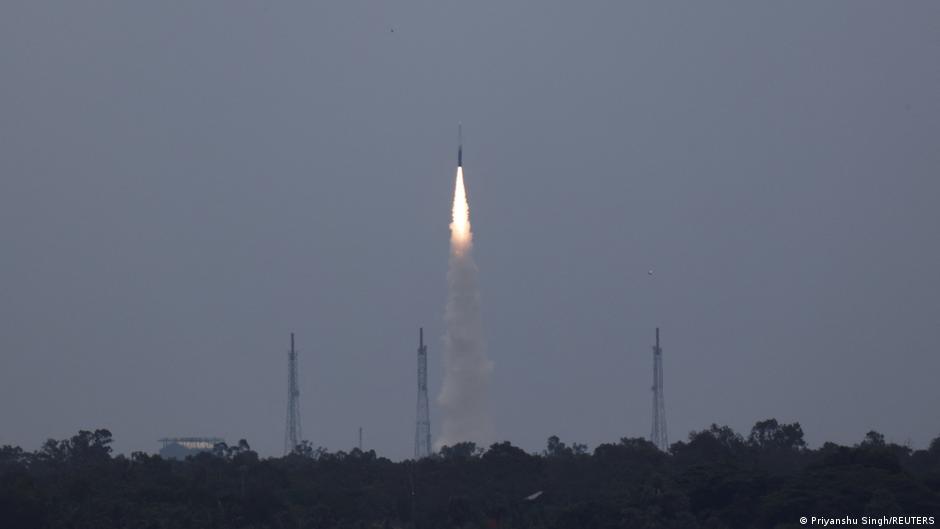
India has achieved a notable advancement in its space program with the successful launch of Vikram-1, the nation's inaugural privately developed orbital rocket. This event, which took place from the Satish Dhawan Space Centre on Sriharikota island, signifies India's strategic intent to expand its footprint in the global commercial rocket launch market. The launch, hailed by Prime Minister Narendra Modi as a moment that 'opens new frontiers and accelerates innovation,' positions India as the third nation, following the United States and China, to attain this capability. This achievement underscores a period of substantial investment and the emergence of over 400 startups within India's burgeoning space sector since the onset of the pandemic.
The Vikram-1 Mission: A New Chapter
The company behind this historic launch, Skyroot Aerospace, confirmed that the Vikram-1 rocket successfully lifted off at 06:35 UTC/GMT (11:05 a.m. local time) as part of 'Mission Aagaman,' a name derived from the Hindi word for 'arrival.' Following the launch, Skyroot Aerospace announced on social media, "Hello space, we have arrived! Vikram-1's Test Flight-1 has completed its mission. The first-ever Indian private sector launch has been successfully completed." The company further elaborated that this launch was a 'grand success' and that additional test flights are planned before the commencement of routine commercial operations.
Standing approximately 22 meters (72 feet) tall, the Vikram-1 rocket is engineered to transport payloads weighing up to 350 kilograms (711 pounds) into low-Earth orbit. This maiden flight carried several experimental payloads from both Indian and international clients, including a lab-grown diamond and robotic arms designed for space debris removal. The primary objectives of this mission were to rigorously assess the rocket's propulsion, avionics, telemetry, and guidance systems during flight, thereby collecting vital data essential for future commercial launches.
Leadership Commendation and Future Outlook
Prime Minister Modi extended his congratulations via social media, characterizing the event as a 'defining moment in India's space journey.' He emphasized the increasing involvement of the private sector, stating, "The growing participation of our private sector is opening new frontiers and accelerating innovation. This achievement will encourage countless youngsters to dream bigger and innovate fearlessly." This successful orbital launch follows the 2022 sub-orbital mission of a smaller rocket, Vikram-S, indicating a progressive trajectory in India's private space endeavors.
India's Expanding Role in the Global Space Economy
The Indian government initiated reforms in 2020, opening its space sector to private investment. This policy shift enabled startups to engage in the development of rockets, satellites, and launch services—activities previously monopolized by the government-run Indian Space Research Organisation (ISRO). This liberalization has spurred rapid growth, positioning India as a significant player in the global space arena. In August 2023, India further solidified its position by becoming the fourth country to successfully execute an unmanned lunar landing, following Russia, the United States, and China.
Government agency IN-SPACe has articulated an ambitious goal for India's space economy, aiming for a fivefold increase from its current 2% global share to reach an estimated valuation of $44 billion by 2033. Skyroot Aerospace exemplifies the success of these new policies; based in Hyderabad, the company recently became the first in India's space sector to achieve a valuation of $1 billion. This rapid expansion, however, has also presented challenges, with ISRO expressing concerns about an exodus of scientists from the state agency to the more dynamic private sector.
Globally, the private space race is intensifying, with various governments across Europe and Asia seeking to secure a share of a market largely dominated by companies like Elon Musk's SpaceX. Nations such as China, Japan, South Korea, Germany, France, and the Netherlands are actively pursuing their own private space initiatives, highlighting the competitive nature of this evolving industry.