Tehran Daily Targets Global Leaders Following Khamenei's Demise
An ultraconservative newspaper in Tehran has reportedly issued a death threat against 13 international political figures, including German Chancellor Friedrich Merz. The publication, identified as Hamshahri, an ultraconservative daily, listed these individuals as 'wanted' in connection with the death of former Supreme Leader Ayatollah Ali Khamenei, stating that they would face severe repercussions. The list also featured prominent figures such as US President Donald Trump, Israeli Prime Minister Benjamin Netanyahu, French President Emmanuel Macron, and Italian Prime Minister Giorgia Meloni. Images accompanying the article depicted these leaders in orange prison uniforms, a style commonly associated with US penal institutions.
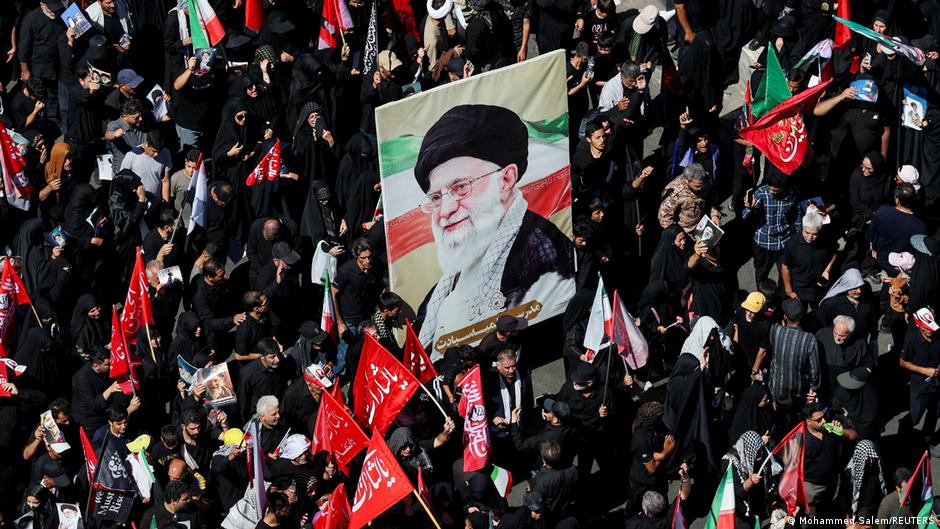
The threats emerged amidst a backdrop of escalating tensions, following significant US and Israeli military actions against Iran since February. Several European nations have reportedly facilitated these operations by granting airspace access. The recent announcements from Iran coincided with the burial ceremonies for the late Supreme Leader, Ayatollah Ali Khamenei.
German Chancellor Friedrich Merz Included on Retaliation List
The inclusion of German Chancellor Friedrich Merz on the alleged retaliation list has drawn particular attention. Following the commencement of US and Israeli military actions against Iran in early March, Chancellor Merz had publicly expressed that the German government shared the sentiment of relief among many Iranians regarding the potential end of the existing regime. He further articulated, "We share the interest of the United States and Israel in seeing an end to this regime's terror and its dangerous nuclear and ballistic armament." Despite these statements, the Iranian regime has maintained its hold on power.
Ayatollah Ali Khamenei was reportedly killed at the initial stages of the campaign against Iran. His successor, Mojtaba Khamenei, announced a commitment to 'retaliation' for his father's death. An online article from the Iranian newspaper, published last week, declared, "Retaliation is inevitable. The criminals will take their wish for a peaceful death to the grave." It is noteworthy that this specific article did not appear in the Sunday print edition of Hamshahri and was subsequently removed from the newspaper's website by the beginning of the week.
Concerns Raised by German Officials
Despite the online article's deletion, German government officials and the opposition Green Party have voiced considerable concern. Marc Henrichmann, who chairs the Bundestag oversight committee responsible for monitoring Germany's intelligence agencies, stated, "We have to assume that Iran's intelligence services are planning attacks in Europe as well." German security agencies are particularly apprehensive about the potential deployment of 'disposable agents' – individuals recruited for a singular attack.
Sebastian Fiedler, domestic policy spokesperson for the parliamentary group of the center-left Social Democratic Party (SPD), echoed these concerns. In an interview with Die Welt newspaper, Fiedler indicated a high threat level, suggesting that current events are likely to "stir up extremist groups and mobilize lone actors." However, many politicians also noted that the Chancellor is already under stringent security protocols, implying that additional security measures for Friedrich Merz might not be immediately necessary.
Broader Implications and German Government's Stance
Omid Nouripour, Vice President of the Bundestag and a Green Party politician born in Iran, shared his perspective with DW, stating, "In Germany, we have had many past experiences with state-sponsored terrorism exported by Iran. The newspaper would not have been able to get the death threat past the censors if the regime hadn't wanted it. So we have to take this seriously. When a regime targets our head of government, that is hostile behavior and should be treated as such."
The German government's official response has been reserved. During a routine press conference on Monday, deputy spokesperson Steffen Meyer confirmed that the government had noted the death threat but declined to offer further comment.
Security experts in Germany are not dismissing the possibility of Iranian terrorist activities within the country. Authorities estimate that approximately 180 individuals in Germany are actively working on behalf of either the Iranian Revolutionary Guards or the Iranian intelligence service. The Federal Office for the Protection of the Constitution, Germany's domestic intelligence agency, informed the online portal Euractiv in May that the Iranian intelligence service has a history of resorting to actions that constitute state terrorism. These actions, according to the agency, encompass "everything from threats against specific individuals to intelligence gathering aimed at planning potential attacks." The agency also indicated that the Iranian security apparatus has been weakened by ongoing attacks in Iran but expressed fears that Tehran could redirect its activities abroad once domestic pressure on the regime diminishes, for example, following an official end to the conflict.
Source: Original Article