Far-Right AfD Utilizes Simson Moped in Campaign
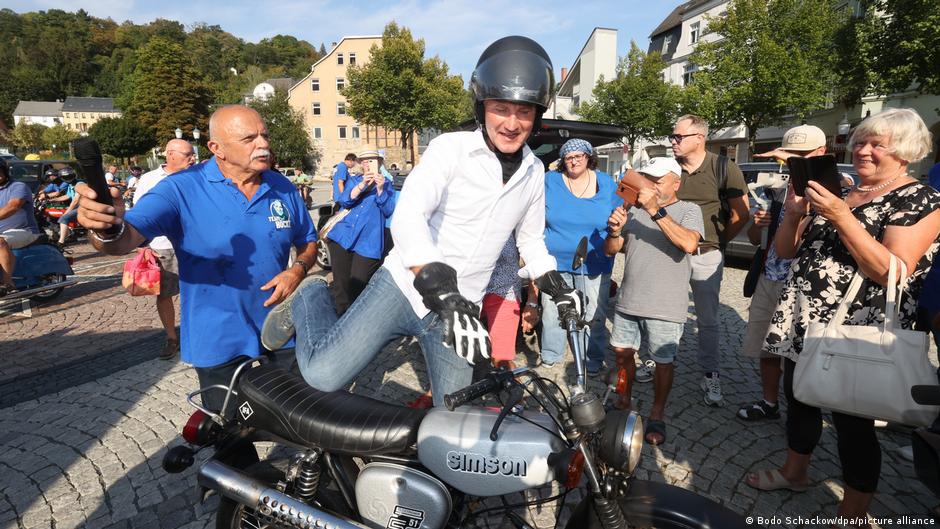
In a recent political campaign video, Germany's far-right Alternative for Germany (AfD) party prominently featured a convoy of retro-styled Simson mopeds, traversing the forests of Thuringia. This region was historically part of Communist East Germany. The video, crafted to evoke a 1970s road movie, heavily relies on nostalgia, with its soundtrack also seemingly designed to recall a bygone era. Leading this two-wheeler rally is Björn Höcke, a prominent hardliner within the AfD.
Höcke's Eastern Identity and Controversial Past
Despite being born and raised in West Germany, Höcke has strategically built his political career in the eastern part of the country, positioning the AfD as a defender of East German identity and addressing perceived grievances. The Thuringia branch of the AfD, under Höcke's influence, has been officially categorized as a confirmed right-wing extremist organization by the state's domestic intelligence agency. Höcke himself has faced legal repercussions, having been convicted twice for the public use of a banned Nazi slogan. Now, he and his party are incorporating the Simson moped, one of East Germany's most recognized cultural symbols, into their political messaging.
The Simson Family Fights Back
This political appropriation of the Simson brand has prompted a strong reaction from its founding family. Dennis Baum, 82, one of the heirs to the Simson company, traveled from New York to Germany to address his family's history and the legacy of the Simson name. Baum articulated his mission to DW, stating, "The mission is to defend ourselves against the use of the family name, the Simson name, by the AfD." He is one of five heirs to the Simson family. While another company holds the trademark, the family retains a consultative role regarding the brand itself.
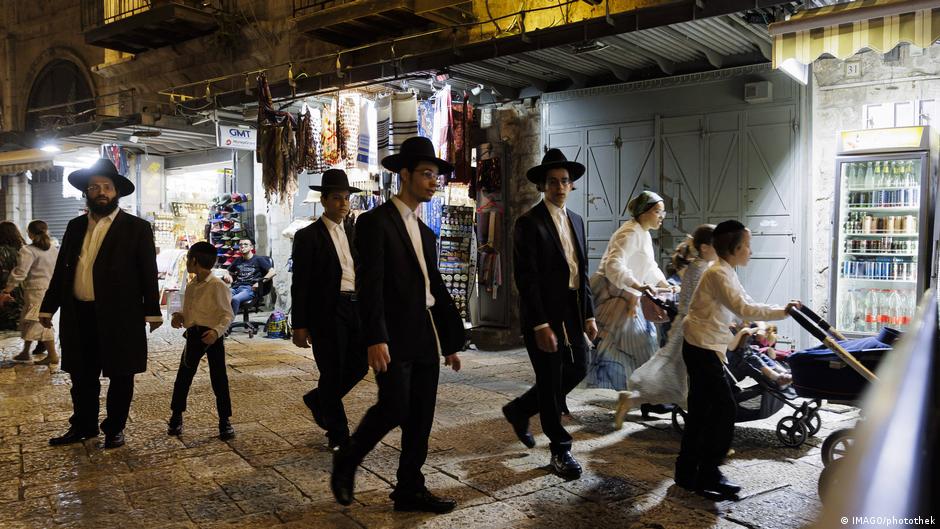
Baum's grandmother belonged to the Jewish family that established the Simson company in Suhl, Thuringia, in 1856. The company flourished, becoming a leading German manufacturer of firearms and later vehicles, until the Nazi regime forcibly seized control from the family in 1935. After World War II, the factory continued its operations in the German Democratic Republic (East Germany), producing the mopeds that would become an iconic consumer brand.
Personal and Historical Objections to AfD's Use
The family's concerns arose earlier this year when the Simson name began appearing in AfD branding. "We found out about the use of our name on T-shirts and posters with the Höcke name or with the AfD name," Baum recounted while rewatching the campaign film. For Baum, the issue extends beyond personal offense, deeply rooted in his family's history. He emphasized, "Well, it's a far-right party with the premise of intolerance, and particularly because they have stated quite clearly that they are antisemitic and we are a Jewish family. That certainly doesn't fit." His demand is straightforward: "The bottom line for us is: Get the Simson name out of politics, all politics." Baum characterized Höcke as "a very difficult person to deal with, and certainly somebody with whom we wouldn't want to associate our name."
Simson Moped and Germany's Enduring East-West Divide
More than three decades after reunification, distinct political, economic, and cultural differences persist between eastern and western Germany. Many eastern Germans continue to feel marginalized, believing their experiences, achievements, and losses following the collapse of communist East Germany have been overlooked or judged through a Western lens. The Simson moped, renowned for its affordability, durability, and ease of repair, became a symbol of East German ingenuity. Thanks to a special exemption, these mopeds could travel at 60 kilometers per hour (35 mph), often serving as crucial transportation in an era of car shortages. The "Schwalbe" (swallow) model, in particular, became instantly recognizable, its distinctive design an integral part of daily life in the GDR until reunification in 1990.
Ulrike Schulz, a historian who has researched the Simson company, noted that for decades, affection for the Schwalbe was largely apolitical. Schulz explains that the AfD has capitalized on this sentiment, stating, "The AfD takes precisely this unpolitical thing and gives it a political charge."
A Broader Far-Right Strategy
Political analyst Johannes Hillje views the AfD's adoption of the Simson brand as part of a wider cultural war. He suggests the moped provides the party with a uniquely valuable symbol: a ready-made emblem of East German youth culture, deeply rooted in regional pride and identity. Hillje points out that the brand's Jewish origins underscore the party's instrumental approach to cultural symbols. "It is a tactic to cover the nativist and radical character of the party," Hillje said. This strategy is not unique to Germany; far-right parties across Europe increasingly align themselves with regional traditions, local symbols, and cultural identity. For example, a 2026 study by political scientist Jan Philipp Thomeczek of the University of Potsdam highlights how Bavaria's conservative Christian Social Union (CSU) and the Free Voters often position themselves as defenders of Bavarian traditions against perceived threats from Berlin or the European Union.
Political scientist Hajo Funke highlighted a distinction in the AfD's trajectory compared to some other European far-right parties. "Unlike neighboring countries' parties such as Le Pen's Rassemblement National or Meloni's post-fascist party, they are not becoming more moderate or pragmatic, but are radicalizing," Funke observed. He suggests that familiar cultural symbols become particularly useful to the AfD in this context, as they help to soften the more radical edges of their political message.
This is precisely why the dispute holds such significance for Baum. He believes the AfD's campaign targets not only those who remember East Germany but also younger generations, aiming to manipulate youths into associating regional pride with the AfD's political agenda. When asked what message he would convey to this younger generation, Baum's response was immediate: "Beware of false friends."
Source: Original Article