
Convicted Murderer Contests US Extradition
A 33-year-old American citizen, serving a life sentence in Germany for the rape and murder of a fellow US tourist near Neuschwanstein Castle, has initiated legal proceedings against his extradition to the United States. The man, whose crimes also included the attempted murder of a second woman, is arguing that a return to his home country could lead to a new trial and potentially a death sentence.
The individual was found guilty and sentenced in 2025 for the offenses committed three years prior. His legal challenge against the extradition order, filed with the administrative court in Augsburg, centers on the potential for capital punishment in the United States, which is not practiced in Germany.
Under German law, due to the recognized 'particular severity of guilt' in his conviction, the man could remain incarcerated for an extended period, estimated between 20 to 25 years. This circumstance suggests that any deportation order might not be enforced for approximately two decades. A spokesperson for the Kempten public prosecutor's office indicated that there is currently no ongoing review process regarding the possibility of his deportation from prison.
The incident garnered significant international attention due to its location at the iconic Neuschwanstein Castle, a globally recognized tourist destination.
German President Praises Coalition's Reform Efforts
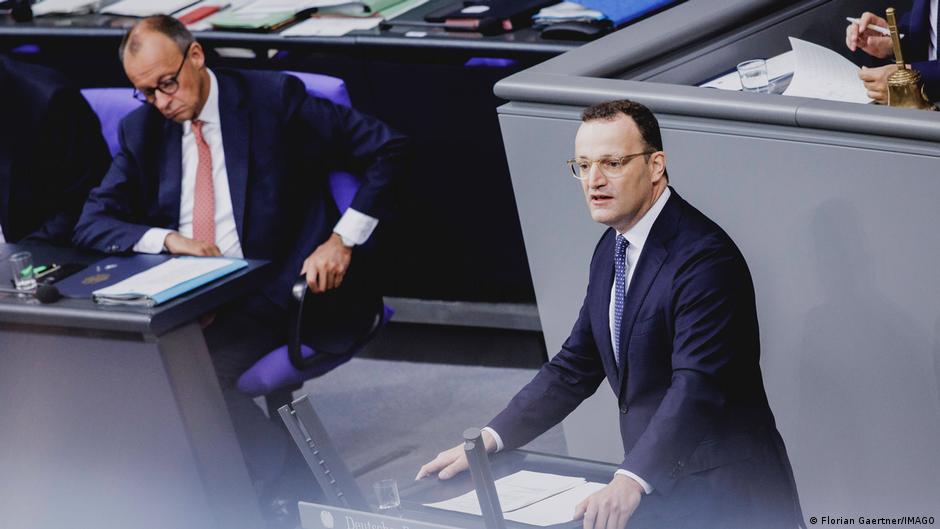
German President Frank-Walter Steinmeier has expressed approval for the significant reforms recently endorsed by the country's governing coalition. Speaking to public broadcaster ZDF on Sunday, Steinmeier described the measures as a "substantial package" aimed at addressing Germany's current challenges, including sluggish economic growth and intense competition from China.
The reforms, which were passed earlier this month by Chancellor Friedrich Merz's coalition, encompass various sectors such as healthcare, pensions, taxation, and welfare. Steinmeier also addressed criticisms concerning the financial support offered by the reforms, clarifying that the primary objective of structural reforms is to stabilize benefit systems rather than immediately increase individuals' disposable income.
The President voiced optimism that this agreement would bring an end to the internal disagreements between Merz's conservative alliance and the center-left Social Democrats, who have been governing together since May 2025. He suggested that this could mark a new phase where the coalition's self-imposed stalemates have been successfully resolved.
Key aspects of the reform package include tax relief for low and middle-income earners, funded by adjustments to wealth tax for high-income individuals. Additionally, labor market changes have been agreed upon, which would allow employers greater flexibility in offering fixed-term contracts and facilitate the termination of permanent contracts for high earners. Steinmeier emphasized the need for patience and perseverance in implementing these reforms, which still require parliamentary approval, stating that regaining economic growth is crucial for restoring respect and trust.
Study Highlights Potential for Reduced Motorway Fatalities with Speed Limit
A recent study suggests that implementing a general speed limit on Germany's Autobahns could significantly decrease the number of accident-related deaths. According to Siegfried Brockmann from the Björn Steiger Foundation, which conducted the research, a maximum speed of 130 kilometers (81 miles) per hour could lead to a 25-30% reduction in fatalities on motorways. This translates to saving approximately 70-90 lives annually, based on the 292 motorway deaths recorded in 2025 out of a total of over 2,800 road fatalities.
Currently, Germany's Autobahns largely operate without a general speed limit, although specific sections often have restrictions. Despite the Transport Ministry's consistent rejection of a nationwide limit, studies indicate that a majority of the German populace supports its introduction.
Proponents of a 130 km/h limit on Autobahns and an 80 km/h limit on other roads also highlight environmental advantages. The Environment Ministry estimates that such measures could reduce greenhouse gas emissions from road transport by 2.7%.
German Railway Improvements Expected to Be Gradual
Transport Minister Patrick Schnieder has cautioned that enhancing the reliability of Germany's train services will be a protracted process, praising the new CEO of Deutsche Bahn (DB), Evelyn Palla, for her strategic approach. Schnieder told the German news agency DPA that achieving significant progress in reliability and punctuality would occur incrementally, stating it is "completely illusory to think that the railway world will be back in order in two years." He referred to the coming period as a "decade of modernization."
Schnieder acknowledged that for "years and decades, too little has been invested in all transport forms, particularly rail," while also stressing the importance of DB improving its internal procedures. A new railway strategy paper sets an ambitious goal of having at least 70% of long-distance trains arrive on time. In June, only 52.6% of trains met this punctuality target.
According to reports, Palla, who assumed the CEO role in October 2025, has called for an additional €13 billion ($14.8 billion) in funding until 2030, beyond the billions already allocated by the government for infrastructure modernization, to address punctuality issues. Schnieder commended Palla's efforts, noting that she is effectively transforming the state-owned company into an economically viable entity and anticipating a much improved financial performance this year.
June Sees Record Drowning Fatalities in Germany
The German Lifesaving Association (DLRG) reported that at least 99 people drowned in Germany in June, marking the highest number of drowning fatalities in 23 years. The DLRG highlighted that most victims were 30 years old or younger, with over 90% being male.
Ute Vogt, President of the DLRG, commented that men often take excessive risks and underestimate dangers, sometimes entering the water under the influence of alcohol or other substances. Of the total drownings, 55 occurred in lakes, 21 in rivers, and six each in swimming pools, the sea, and canals. The states with the highest populations, North Rhine-Westphalia (22) and Bavaria (21), recorded the most deaths.
This increase in fatalities coincided with a severe heat wave that affected Germany and much of Western Europe at the end of June, with temperatures exceeding 40 degrees Celsius (104 F) in several regions.
Source: Original Article