A New Digital Frontier in Southern Germany
In a strategic move signaling a robust challenge to the dominance of global technology companies, the Schwarz Group, renowned for its retail empires Lidl and Kaufland, is making substantial investments in its digital division, Schwarz Digits. The initiative, spearheaded by Germany's richest man, Dieter Schwarz, is poised to create a significant European player in the cloud computing and digital solutions sector.
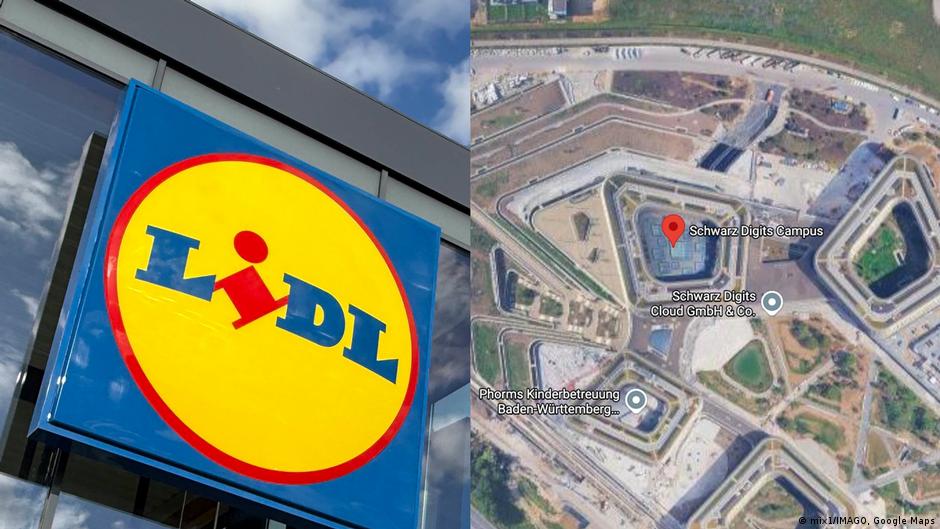
The scale of this ambition is immediately apparent at the newly constructed Schwarz Digits Campus in Bad Friedrichshall, a town in southern Germany. Bernd Wagner, who oversees cloud business and sales for Schwarz Digits, articulates the company's vision with palpable enthusiasm. He highlights impressive construction metrics, such as the use of steel seven times that of the Eiffel Tower and cabling extending the distance to Naples, underscoring the magnitude of the project. This state-of-the-art facility, scheduled for an official opening on July 21, 2026, is designed to accommodate 3,500 employees, offering a comprehensive ecosystem including a daycare center, restaurant, and fitness amenities. Its architectural design, featuring five multi-story curved glass buildings arranged around a central pond, evokes the campuses of leading tech firms in Silicon Valley, a deliberate statement of intent, according to Wagner, that Schwarz Digits is a serious contender on the global stage.
From Retail Powerhouse to Tech Innovator
The strategic location of this digital hub in Bad Friedrichshall, near Heilbronn—the hometown of the 86-year-old Dieter Schwarz—reflects the billionaire's enduring influence and entrepreneurial spirit. From humble beginnings in Heilbronn, Schwarz meticulously built the Schwarz Group into a global retail behemoth, employing over 600,000 individuals worldwide through its supermarket chains, Lidl and Kaufland. The conglomerate's operational philosophy of maintaining internal control has led to diversification across various sectors, including food production, waste management, and recycling, and now, a significant foray into digitalization.
The financial scale of the Schwarz Group is staggering, with revenues nearing €185 billion in the past year, surpassing major German corporations like SAP, Mercedes, and Bayer. Only automotive giant Volkswagen reported higher earnings in Germany. Despite its immense size and influence, the Schwarz Group and its founder have historically maintained a low public profile, with Dieter Schwarz famously avoiding the limelight. Few photographs of him exist, and he is reportedly able to move freely in Heilbronn unrecognized, a testament to his preference for privacy.
Championing European Digital Sovereignty
The current narrative surrounding the Schwarz Group, however, is shifting to focus on digital independence and Germany's role as a center for innovation. Wagner emphasizes the critical importance of digital sovereignty, asserting that Europe must reclaim its position at the forefront of technological development rather than relying solely on solutions from the United States or China. This strategic imperative resonates with current geopolitical and economic trends, leading Schwarz Digits to secure significant contracts with various governmental bodies, including the Dutch government, several German ministries, and the German Football Association (DFB).
A monumental investment of €11 billion is being channeled into constructing a data center in the Spreewald region, south of Berlin, marking the largest single investment in the company's history. While the cost of the new Bad Friedrichshall headquarters remains undisclosed, its purpose is clear: to attract and retain top-tier IT talent. The implicit message is that aspiring tech professionals need not relocate to Silicon Valley when opportunities to shape the future exist within Germany.
Heilbronn's Transformation into a Knowledge Hub
Dieter Schwarz's philanthropic endeavors, primarily through the Dieter Schwarz Foundation, have been instrumental in transforming Heilbronn into a vibrant knowledge hub. Since its establishment in 1999, the foundation has focused on education, science, research, and entrepreneurship. The Education Campus, a flagship project of the foundation, hosts numerous German research institutions and educates approximately 8,000 students, with plans for further expansion. Complementing this academic ecosystem is the Experimenta, Germany's largest science center, which allows visitors to engage directly with artificial intelligence and other emerging technologies. The Experimenta has not only become a landmark but also a significant tourist attraction for the city.
Heilbronn's Mayor, Harry Mergel, acknowledges the pivotal role of the Schwarz Group and the Dieter Schwarz Foundation in the city's metamorphosis. Once colloquially known as "Heilbronx," Heilbronn now ranks among Germany's cities with the highest purchasing power, attracting a diverse influx of international residents drawn by the growing IT sector. A particularly ambitious project, the Innovation Park Artificial Intelligence (IPAI), aims to elevate Heilbronn's international standing, positioning it to compete with major European tech centers like London and Paris. With the first buildings slated to open in 2027, the IPAI is projected to host up to 5,000 researchers and professionals, with the Schwarz Group and the Dieter Schwarz Foundation once again playing central roles. The IPAI, which has been operating as a network since 2022 and involves around 140 companies, is seen by Mergel as an "insurance policy for the region," underscoring the belief that AI will be indispensable for future competitiveness across all sectors.
Can Schwarz Digits Compete?
Located just a 15-minute drive from Heilbronn's city hall, the Schwarz Digits headquarters embodies this future-oriented vision, complete with advanced amenities like a cooking robot serving employees around the clock. Wagner confidently predicts that this region will soon emerge as Germany's and Europe's largest AI hub, with Schwarz Digits at its core.
The question remains whether Schwarz Digits can genuinely contend with established tech giants. Amazon, for example, reported $135 billion in cloud revenue last year, dwarfing Schwarz Digits' €2.2 billion across all its operations. Nevertheless, Wagner's unwavering confidence stems from the perceived market demand for independent European IT solutions. While his advocacy for digital sovereignty may sometimes resemble a public relations strategy, Dieter Schwarz's historical track record of astute business instincts and sustained success—transforming the Schwarz Group into Europe's largest and the world's fourth-largest retailer—suggests that his latest venture into the digital realm could indeed prove to be another triumphant bet.