The Unseen Obstacle in Japanese Real Estate
Japan's housing market is grappling with a unique challenge: a significant number of properties remain vacant or are difficult to sell and rent due to cultural beliefs surrounding death and misfortune. These residences, termed 'jiko bukken' or 'stigmatized properties,' are often shunned by potential occupants, creating a niche market for specialized services aimed at alleviating these concerns.
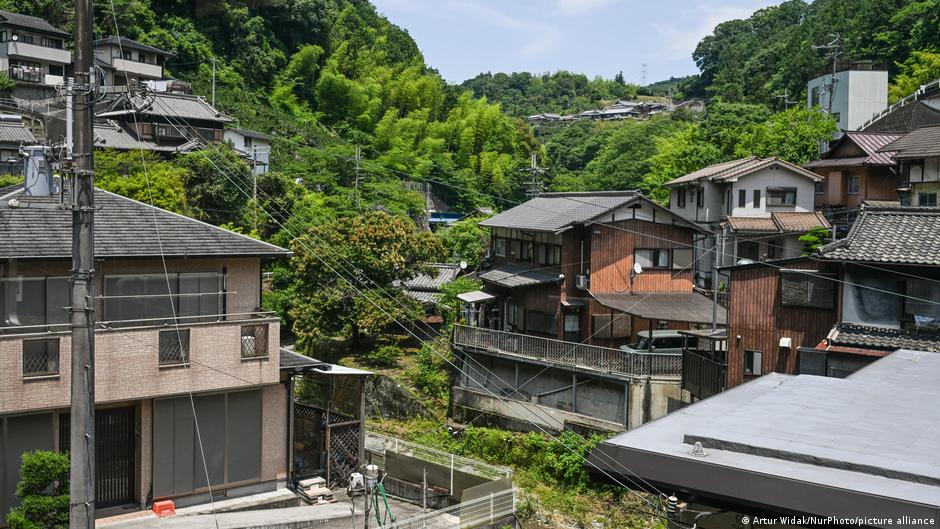
Consider a two-story house in a southern Yokohama suburb, its windows shuttered, paper screens torn, and garden overgrown. Despite its potential for renovation, this property has stood empty for at least five years. Its 'jiko bukken' status, likely stemming from a suicide, a fatal fire, or a 'lonely death'—the passing of an elderly person without immediate discovery—renders it undesirable. Murders are another clear reason for a property to be ostracized.
Addressing the 'Impurity' of Death
Kazutoshi Kodama, president of Kachimode Co., a specialist property firm established in December 2022, identifies 'jiko bukken' as a financial burden for owners and, concurrently, a business opportunity. His company offers comprehensive services, including what he terms 'ghost investigations,' to assist owners of incident-affected properties with rental management. Demand for these unconventional services is reportedly surging.
Kodama explains that Japanese cultural perspectives often regard death as impure, associating it with misfortune. This deeply ingrained belief leads many to avoid close contact with such properties, let alone consider renting or purchasing them. This cultural sensitivity is a critical factor in the reluctance of the Japanese public to engage with 'jiko bukken.'
Legal Requirements and Market Impact
The challenges of selling or renting a 'jiko bukken' are compounded by legal obligations. Real estate agents are legally required to disclose a property's history to interested parties. Furthermore, a dedicated website exists that publicly lists the location of every stigmatized property in Japan, often detailing the reason for its blacklisting. Most entries cite accidental fires, lonely deaths, or suicides, while some simply advise prospective buyers to 'obtain details from real estate agent.'
The financial implications are substantial. In major cities with high rental demand, owners of stigmatized properties typically must reduce rents by 30%. In other areas, reductions can be as high as 50%. Kodama notes that some properties remain vacant for extended periods, with some advertising for tenants for over 500 days, and in extreme cases, more than 1,000 days. For these properties, price reductions often fail to attract occupants, leading to prolonged vacancies.
The Rise of 'Ghost Investigations'
To mitigate these issues, Kachimode offers a unique service: the 'ghost investigation.' This involves team members staying in incident-affected rooms from 10 p.m. to 6 a.m., conducting various surveys. These include video and audio recording, electromagnetic wave surveys, measurements of room temperature, humidity, and atmospheric pressure, thermography, and noise surveys. The objective is to confirm that refurbished rooms are free from any lingering 'impurities' and to demonstrate the absence of poltergeist phenomena, ghosts, or other mysterious occurrences.
Kodama's company, unique in Japan, collaborates with a university professor specializing in monitoring the supernatural. An overnight investigation costs 88,000 yen (approximately €474 or $542) and culminates in a detailed report for the owner. This report serves as evidence for real estate agents to assure prospective tenants or buyers that no 'bad spirits' remain.
While Kodama acknowledges that his equipment has occasionally registered anomalies, such as video cameras stopping or microphones malfunctioning, he stresses that in most cases, perceived 'impurities' cannot be replicated and are dismissed as isolated incidents. However, he also notes that some properties consistently exhibit mysterious phenomena over extended periods.
Wider Implications for Japan's Housing Stock
Joey Stockerman, co-founder of AkiyaMart, a platform promoting the sale of vacant properties across Japan, highlights the broader issue of empty homes. He explains that while family disputes over property disposal and perceptions of low resale value contribute to vacancies, stigmatized properties also play a significant role. A government survey from late 2024 indicated 9 million vacant homes in Japan, representing 13.8% of all accommodation.
Stockerman corroborates the prevalence of superstition, noting that Japanese individuals are often hesitant to rent properties where someone has died, or even homes located near graveyards, due to strong sentiments surrounding death.
Innovative Solutions and Future Outlook
The investment in 'jiko bukken' can be challenging. Stockerman recounts a business acquaintance who purchased a stigmatized property in a Tokyo suburb for less than $5,000—about 5% of its true value—as an investment. However, the real estate agent's mandatory disclosure of the property's history led to it remaining vacant for two years before a tenant was found.
Recognizing these sensitivities, AkiyaMart has introduced a service where a Shinto priest performs a cleansing ceremony to rid a property of any perceived 'bad spirits.' Stockerman notes that this 'quirky' offering has generated interest.
Kodama, with over 15 years in real estate, believes that the industry of cleansing homes of their unpleasant past will continue to grow. He asserts that even properties with consistent mysterious phenomena can be managed, and his company works with owners to find solutions. He sees significant potential in this sector, driven by a genuine need in the market.
Source: Original Article