
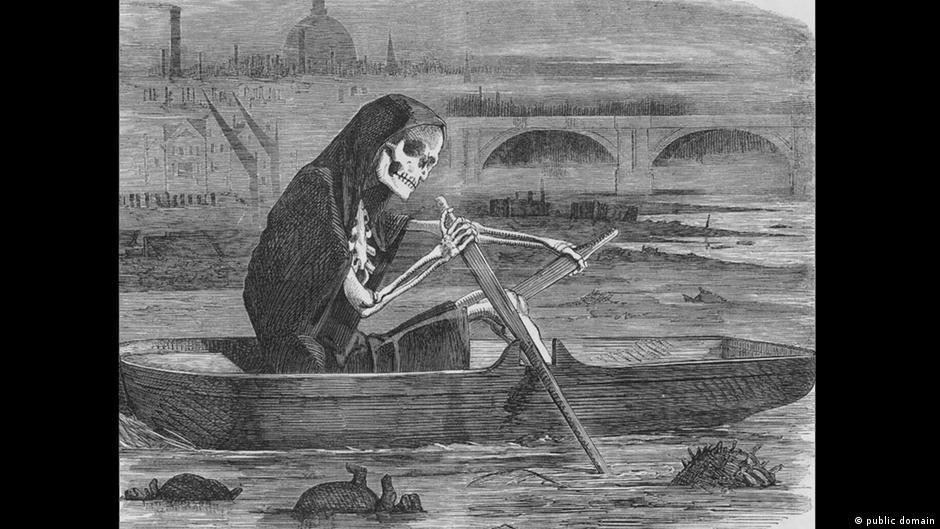
A City Overwhelmed by Odor
The summer of 1858 marked a pivotal, albeit unpleasant, moment in London's history. A protracted heatwave gripped the city, intensifying the already noxious effluvia emanating from the River Thames. This period, now famously dubbed 'The Great Stink,' saw the capital overwhelmed by an unbearable stench, a direct consequence of inadequate sanitation and the river's role as an open sewer. The incident became a powerful catalyst, compelling authorities to address the dire public health crisis and ultimately leading to the construction of one of the world's most sophisticated sewer systems.
The Thames: A Lifeline Turned Hazard
For centuries, the River Thames had been central to London's identity and prosperity, serving as a vital artery for trade, transport, and a source of drinking water. However, as the city's population boomed during the Industrial Revolution, the river's capacity to absorb human and industrial waste was catastrophically exceeded. Raw sewage from homes, factories, and slaughterhouses flowed directly into the Thames, transforming it into a festering conduit of disease. The prevailing attitude of the era, prior to germ theory, often attributed illnesses like cholera and typhoid to 'miasma' – foul-smelling air – a belief that the 1858 stench inadvertently reinforced.
The Summer of 1858: A Breaking Point
The scorching temperatures of that summer significantly worsened the situation. The low water levels and increased decomposition rates in the river caused the accumulated sewage to release an unprecedented volume of putrid gases. The stench permeated every corner of London, affecting all strata of society. Parliament, situated directly beside the Thames, found itself particularly besieged by the odor. Reports from the time describe members attempting to escape the smell by hanging sheets soaked in disinfectant in their windows and even considering relocating the parliamentary sessions. The sheer intensity of the odor made daily life intolerable, impacting commerce, social gatherings, and overall public well-being.
Public Outcry and Political Impetus
While the health implications of the polluted Thames had been a growing concern for decades, with recurrent cholera outbreaks claiming thousands of lives, it was the visceral, inescapable nature of 'The Great Stink' that finally galvanised political will. The affluent and influential, who had previously been somewhat shielded from the worst effects of the river's pollution, now found themselves equally afflicted. The sheer discomfort and public outcry created an undeniable urgency for action. Newspaper editorials widely condemned the inaction of authorities, painting vivid pictures of the city's plight and demanding immediate solutions.
Joseph Bazalgette: The Visionary Engineer
The man largely credited with solving London's sewage crisis was Joseph Bazalgette, the chief engineer of the Metropolitan Board of Works. For years, Bazalgette had advocated for a comprehensive, integrated sewer system, but his proposals had faced bureaucratic hurdles and funding challenges. 'The Great Stink' provided the necessary political leverage and public support for his ambitious plan to move forward. Bazalgette's design was revolutionary for its time: a vast network of interconnected underground sewers, stretching over 1,300 miles, designed to intercept sewage before it reached the Thames and channel it to treatment works far downstream, outside the city limits. This monumental project also incorporated pumping stations to lift the sewage over natural inclines, ensuring a continuous flow.
Construction and Lasting Legacy
The construction of Bazalgette's sewer system was an engineering marvel, employing thousands of labourers over many years. It involved digging enormous tunnels, building massive brick conduits, and constructing impressive pumping stations, many of which are still operational today. Upon its completion, the system dramatically reduced the incidence of waterborne diseases like cholera, transforming public health in London and serving as a model for urban sanitation worldwide. 'The Great Stink' thus stands as a powerful historical example of how an acute environmental crisis, exacerbated by natural conditions, can force societal and political change, leading to fundamental improvements in urban infrastructure and public welfare.
Source: DW.com