Historic Sale: T. Rex 'Gus' Sets New Benchmark for Fossil Auctions
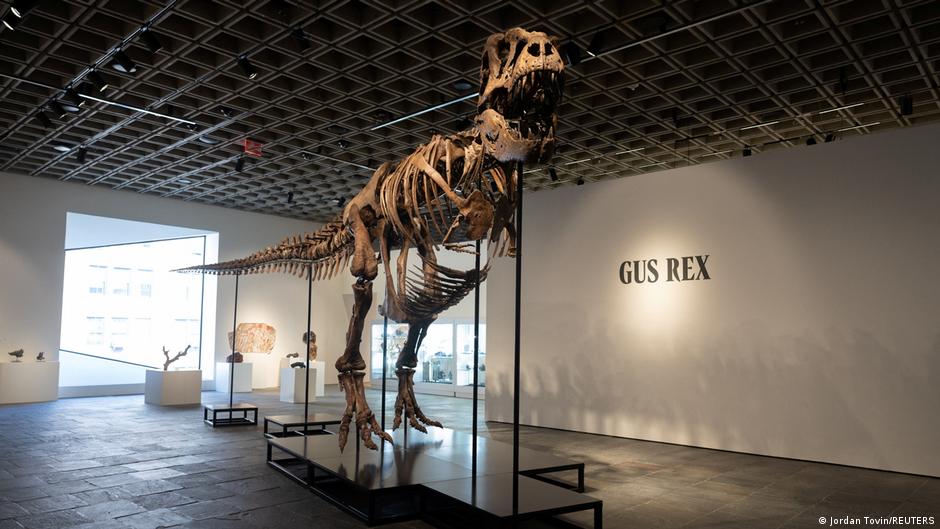
In a significant event for the world of paleontology and art markets, a Tyrannosaurus Rex skeleton, known as 'Gus,' fetched an extraordinary $50.1 million at a Sotheby's auction in New York. This sale, which concluded on Tuesday, July 14, 2026, not only exceeded its pre-sale estimates but also established a new global record for a dinosaur fossil sold at auction. The intense bidding war lasted approximately ten minutes, involving seven prospective buyers, and ultimately concluded with an anonymous purchaser securing the prehistoric specimen.
Prior to this landmark sale, the record for the most expensive dinosaur fossil belonged to 'Apex,' a Stegosaurus skeleton that had sold for $44.6 million at Sotheby's in 2024. The sale of 'Gus' underscores a burgeoning interest and financial investment in ancient biological artifacts, particularly those of iconic dinosaurs.
The Remarkable Completeness and Discovery of 'Gus'
The Tyrannosaurus Rex skeleton, now famously known as 'Gus,' is distinguished by its remarkable completeness. According to Sotheby's, the specimen is approximately 61% complete by bone count, comprising 183 fossil bone elements and an additional 30 gastralia, commonly referred to as belly ribs. This level of preservation and completeness is considered exceptional among discovered T. rex specimens.
'Gus' was initially unearthed in 2021 on a cattle ranch in South Dakota. The ranch was owned by the late Gary "Gus" Licking, whose name was subsequently bestowed upon the magnificent fossil. Cassandra Hatton, Sotheby's vice chairman and global head of science and natural history, highlighted the fossil's unique attributes ahead of the auction. "Gus is one of the biggest and most complete T. rex ever found," Hatton stated, emphasizing the combination of its size, quality, and the meticulous preservation efforts undertaken during its excavation and preparation.
Measuring an impressive 38 feet (11.6 meters) in length, the skeleton dates back to the Late Cretaceous period, an era approximately 67 million years ago. The comprehensive nature of the find, encompassing a significant portion of its original bone structure, contributes immensely to its scientific value and market appeal.
Growing Market and Ethical Concerns in Fossil Sales
The record-breaking sale of 'Gus' is indicative of a growing trend in the market for dinosaur fossils, where such specimens are increasingly viewed as valuable assets by private collectors. While these auctions generate considerable public interest and financial investment, they also ignite a debate within the scientific community regarding the ethics and implications of private ownership of significant paleontological discoveries.
Many scientists express concerns that such high-value sales could lead to important scientific specimens being held in private collections, potentially limiting their accessibility for research, public display, and educational purposes. The argument often raised is that fossils of this magnitude are part of humanity's shared natural heritage and should ideally be housed in public institutions where they can be studied by researchers globally and viewed by a wider audience. The increasing commercialization of these artifacts could, some argue, incentivize less scrupulous excavation practices and potentially diminish the scientific integrity of fossil recovery.
Conversely, proponents of private sales contend that they provide significant funding for further paleontological exploration and excavation, as well as offering a means to preserve and curate rare specimens that might otherwise be overlooked or left unprotected. They also suggest that private collectors often loan or donate their acquisitions to museums, contributing to public knowledge and display in different capacities.
The sale of 'Gus' undoubtedly marks a pivotal moment in the intersection of science, commerce, and culture, bringing to the forefront ongoing discussions about the future of significant fossil discoveries and their role in both scientific advancement and the global art market.
Source: Original Article