Ukrainian Parliament Confirms New Prime Minister
In a significant political development, Ukraine's lawmakers have formally endorsed Sergii Koretskyi, the former head of the state energy company Naftogaz, as the nation's new Prime Minister. This appointment, put forth by President Volodymyr Zelenskyy, marks the second major cabinet overhaul within a year. Koretskyi, an engineer and economist by profession, has no prior government experience, yet Zelenskyy has highlighted his expertise in the energy sector as crucial for preparing Ukraine for the upcoming winter season.
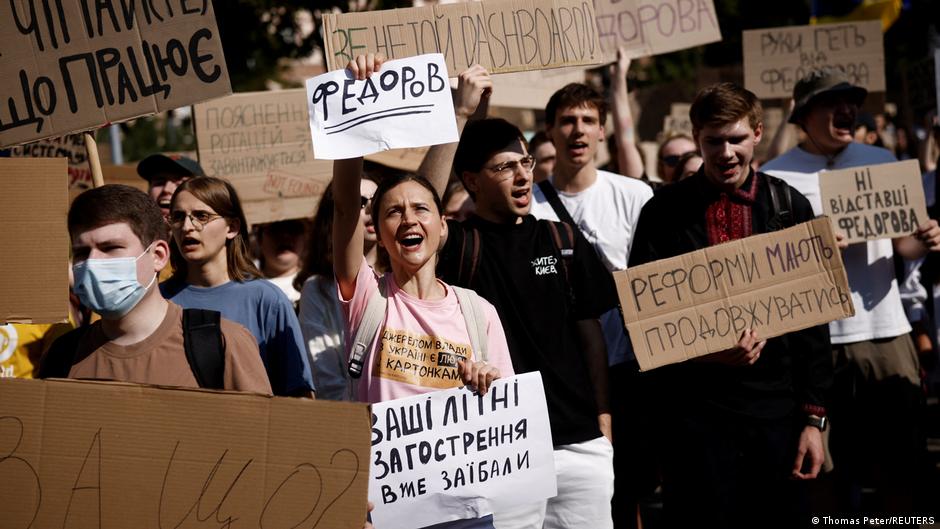
The parliamentary approval of Koretskyi follows the resignation of his predecessor, Yulia Svyrydenko, as President Zelenskyy expressed a need for "necessary changes to the Ukrainian government." This reshuffle, however, has not been without controversy, particularly concerning the dismissal of Defense Minister Mykhailo Fedorov, which has ignited public demonstrations in Kyiv.
Controversy Surrounds Defense Minister's Dismissal
The unceremonious departure of Mykhailo Fedorov from his role as Defense Minister, merely six months after his appointment, has sparked considerable public outcry and rare wartime protests across Ukraine. Fedorov, who previously spearheaded Ukraine's digital transformation efforts, was widely credited for modernizing government services and enhancing battlefield technology, including a significant boost in drone warfare capabilities. His reformist approach and data-driven strategy to counter Russian forces had garnered widespread public support.
President Zelenskyy's decision to remove Fedorov has been met with criticism, especially given allegations from Fedorov himself that Commander-in-Chief Oleksandr Syrskyi issued an ultimatum demanding his dismissal. Fedorov openly accused Syrskyi of obstructing ministry initiatives and failing to address critical issues, stating, "Instead of working out how to defeat Russia, he has figured out how to split the country." Analysts suggest that Zelenskyy, at a crucial juncture in the ongoing conflict, appears to have sided with his trusted military commander over the reform-minded defense minister. In an attempt to address the growing internal divisions, President Zelenskyy has called for "unity" within Ukraine's military leadership, acknowledging the difficult choices a wartime president faces.
Appointment of Acting Defense Minister and Ongoing Conflict
Following Fedorov's removal, President Zelenskyy appointed Yevhenii Khmara, the acting head of Ukraine's security service (SBU), as interim defense minister, pending parliamentary confirmation. Zelenskyy praised the SBU for its effectiveness in executing long-range strikes against Russia, suggesting Khmara's experience would be a valuable asset in his new role. This change comes as the conflict with Russia continues into its fourth year, marked by intensified military actions and significant humanitarian efforts.
In a recent exchange of fallen soldiers' bodies, Ukraine reported receiving the remains of 501 troops, while Russia recovered 31 of its own. Since the beginning of 2025, Ukraine has repatriated nearly 21,000 bodies, a stark contrast to the just over 600 returned to Russia. Both nations continue to maintain secrecy regarding official casualty figures.
International Support and Diplomatic Efforts
Amidst these internal changes, Ukraine continues to receive vital international support. The United Kingdom has pledged €300 million (approximately $345 million) to assist Ukraine in acquiring 16 Swedish-made Gripen fighter jets. This announcement was made by outgoing UK Prime Minister Keir Starmer during his final visit to Kyiv before leaving office. The funding complements a previous agreement Ukraine signed with manufacturer Saab for the aircraft, valued at around $2.5 billion. Starmer reiterated Britain's unwavering commitment to Ukraine, a sentiment echoed by President Zelenskyy, who awarded Starmer the "Order of Freedom" honor.
Concurrently, diplomatic efforts to mediate an end to the conflict persist. Turkey's Foreign Minister Hakan Fidan renewed an offer to host peace talks between Ukraine and Russia during his visit to Kyiv. Fidan emphasized the urgent need for peace, stating, "There is simply no explanation for a war in Europe to continue for five years in the 21st century." While Ukraine's Foreign Minister Andriy Sybiga indicated President Zelenskyy's readiness to meet with Russian President Putin in Turkey, Kremlin spokesman Dmitry Peskov stated that there are currently "no immediate prospects for resuming the negotiation process."
Escalation in Black Sea and Sea of Azov
The conflict has also seen an escalation in naval engagements within the Black Sea and the Sea of Azov, critical corridors for global grain exports. Both Russia and Ukraine have intensified attacks on shipping in these waters. Kyiv claims to have struck at least 11 Russian vessels, while Moscow reports targeting a Ukrainian boat and maritime infrastructure near Odesa. Ukraine's drone forces assert that recent operations have targeted oil tankers, cargo ships, and tugboats, bringing the total number of vessels hit this month to nearly 150. Ukraine's expanding campaign from the Sea of Azov into the Black Sea aims to disrupt Russian military logistics and isolate Crimea, while Russia has intensified its strikes on Ukrainian ports and infrastructure in Odesa, which are vital to Ukraine's wartime economy.
Source: Original Article