Ukrainian Sports Minister Expresses Strong Disapproval Over IOC's Reversal on Russian Olympic Participation
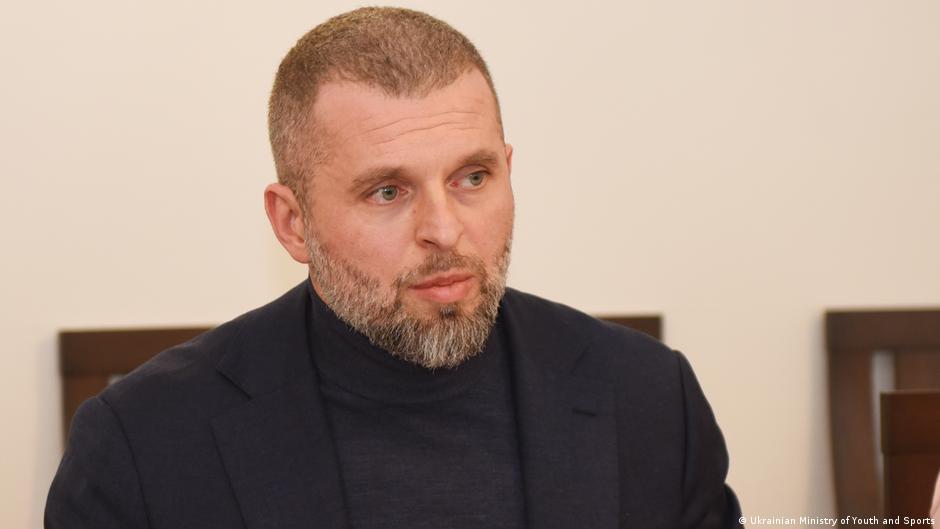
Ukraine's Sports Minister, Matviy Bidnyi, has articulated his profound dismay and outrage following the International Olympic Committee's (IOC) recent decision to lift certain restrictions on Russian athletes, potentially paving the way for their return to international competitions. In an exclusive statement provided to DW, Bidnyi described the move as a significant affront to ethical sportsmanship and a direct disrespect to the memory of Ukrainian athletes who have lost their lives in the ongoing conflict.
Bidnyi emphasized that the IOC's decision is not only deeply unfair to athletes who adhere to global sporting regulations but also sends a dangerous message of impunity worldwide. He challenged IOC President Kirsty Coventry to personally visit Ukraine, urging her to observe the realities of the war-torn nation. "I want her to stand on our train platforms and see our defenders saying goodbye to their children before leaving for the frontline. I want her to visit our ruined sports academies and meet our young athletes who have to train under missile sirens," Bidnyi stated. He expressed conviction that such an experience would immediately halt any discussions about 'neutrality' or 'procedural compliance'.
IOC's Rationale and Ukrainian Counter-Arguments
The IOC, in its official announcement, cited an analysis by its Legal Affairs Commission, which reportedly found that the Russian Olympic Committee (ROC) no longer included regional sports organizations located in territories under the jurisdiction of the Ukrainian Olympic Committee. This rationale was welcomed by Russian Sports Minister Mikhail Degtyarev, who suggested it would facilitate a full return for Russian athletes to international sports.
However, Bidnyi countered this interpretation, asserting that the ROC had, in fact, excluded all 89 of its regional sports organizations, not merely those in disputed Ukrainian territories. He argued that singling out only Ukrainian territories for exclusion would be perceived as a sign of weakness within Russia, effectively acknowledging that these territories do not belong to them. Bidnyi expressed skepticism that the IOC genuinely failed to comprehend this nuance, suggesting instead that it was a deliberate choice to disregard the actual situation, thereby undermining the committee's credibility.
Historical Context of Restrictions
Russia has faced significant sanctions from international sporting bodies since its full-scale invasion of Ukraine commenced in 2022. The IOC notably suspended Russia's Olympic Committee in 2023. While some Russian athletes were permitted to compete as neutrals in the 2024 Paris Olympics and the 2026 Milano Cortina Winter Games, this was contingent upon their ability to demonstrate no support for the war and no affiliations with Russia's military or security forces.
In a 2023 interview, Bidnyi had controversially stated that labeling Russian athletes as 'neutral' equated to supporting murder. His recent reaction to the IOC's latest decision maintains a similarly strong stance, reinforcing his belief that the decision conveys a perilous message of absolute impunity to the global community.
Impact on Ukrainian Sports and Athletes
The conflict has had a devastating impact on Ukraine's sports community. Bidnyi reported that 688 Ukrainian athletes and coaches have been killed by Russian forces since the invasion began. Furthermore, 911 sports infrastructure facilities have been either destroyed or significantly damaged. These figures underscore the profound human and material cost of the war on Ukrainian sport.
The minister highlighted instances where Ukrainian athletes have been directly affected, such as Vladyslav Heraskevych, who was prevented from competing in men's skeleton at the 2026 Winter Olympics. Heraskevych intended to wear a helmet featuring portraits of more than 20 Ukrainian athletes killed in the conflict, an act that was deemed to violate Olympic rules.
Fighting for the 'True Values of Sport'
Bidnyi affirmed Ukraine's commitment to challenge the IOC's decision, emphasizing the need to "defend the true values of sport." He stressed that symbols of an aggressor state have no place in international sports events and that the world must not be allowed to forget the human cost of the war. He also accused Russia of exploiting sport as a propaganda tool.
Addressing the argument that punishing athletes for their government's actions is unfair, Bidnyi disagreed with IOC President Coventry's implied position. He clarified that the issue is not about individuals being penalized for their nationality, but rather about accountability. "You cannot celebrate 'human dignity' on an Olympic podium while your institution turns a blind eye to the ongoing murder of Ukrainian athletes," he asserted.
The IOC's recent statement confirmed the removal of the previous requirement for neutral athletes to demonstrate no links to Russia's military or security agencies and no public support for the war. While the ban on the Russian national anthem and flag remains in place for now, Bidnyi believes that if Russia's flag is ultimately allowed to fly at the 2028 Los Angeles Olympics, it would represent a "moral failure for the entire sports world."
Source: DW