Volkswagen's Strategic Workforce Adjustment
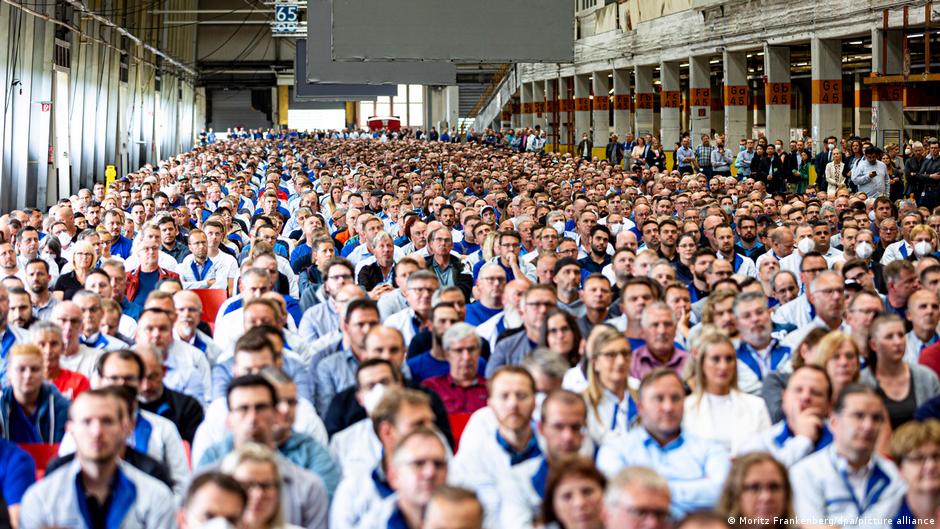
Volkswagen AG, a cornerstone of the German automotive industry, is reportedly embarking on a substantial restructuring of its global workforce. The company, which currently employs approximately 630,000 individuals worldwide, is said to be considering the elimination of up to 100,000 positions. This strategic move comes as the automaker faces mounting pressures from a rapidly transforming global automotive market, characterized by the accelerated shift towards electric vehicles (EVs) and intensified competition, particularly from emerging players in the Chinese market. The decision to streamline operations and reduce personnel reflects a broader industry trend where traditional manufacturers are adapting to new technological paradigms and economic realities.
Historical Growth and Current Challenges
For decades, Volkswagen's substantial workforce was often seen as a testament to its industrial might and a source of national pride in Germany. The company's expansion, particularly during the post-war economic boom and subsequent globalization, led to a significant accumulation of personnel across various divisions and international locations. This growth was underpinned by a production model that relied heavily on human labor, supported by a strong union presence and a culture of long-term employment. However, this very strength has evolved into a significant cost factor in the current economic climate. The automotive sector is undergoing a profound transformation, driven by technological advancements such as electrification, autonomous driving, and digitalization. These shifts necessitate different skill sets, production methods, and organizational structures. Legacy manufacturing processes, while robust for internal combustion engine (ICE) vehicles, are often less efficient or even obsolete in the context of EV production. Consequently, a workforce optimized for older technologies may present an economic burden when transitioning to new ones.
The Impact of Electrification and Digitalization
The transition to electric vehicles is a primary catalyst for Volkswagen's reevaluation of its workforce. Producing EVs typically requires fewer components and, in some stages, less manual labor compared to traditional gasoline or diesel cars. For instance, the intricate assembly of internal combustion engines, with their numerous moving parts, is replaced by simpler electric powertrains. This fundamental change in manufacturing processes implies that the existing workforce, particularly those specialized in ICE production, may face redundancy. Furthermore, the increasing integration of software and digital technologies into modern vehicles demands a shift in expertise from mechanical engineering to software development and data analytics. This necessitates either retraining a significant portion of the existing staff or hiring new talent, both of which incur substantial costs and time.
Competitive Pressures from the Chinese Market
The rise of Chinese EV manufacturers presents another critical challenge for Volkswagen. Companies like BYD and Nio have rapidly gained market share, not only within China but also increasingly in international markets. These new entrants often operate with leaner organizational structures, lower labor costs, and a faster pace of innovation, particularly in battery technology and digital features. Their aggressive pricing strategies and rapid product development cycles put immense pressure on established automakers like Volkswagen, which typically carry higher legacy costs, including those associated with a large, well-compensated workforce. To compete effectively, Volkswagen must find ways to reduce its operational expenditures and enhance its agility, with workforce optimization being a key lever.
Navigating Labor Relations and Social Responsibility
Any large-scale job reduction plan in Germany is complex due to strong labor unions and co-determination laws. Volkswagen’s works council wields considerable influence, and any significant restructuring must be negotiated to mitigate social impact. The company has historically prioritized social responsibility and maintaining good relations with its workforce. Therefore, the impending cuts are likely to involve a combination of early retirement schemes, voluntary severance packages, and reskilling programs rather than outright dismissals, whenever possible. The goal will be to achieve the necessary cost reductions while minimizing social disruption and preserving employee morale to the extent feasible. This delicate balancing act is crucial for the company's long-term stability and its reputation as a responsible employer.
Future Outlook and Strategic Imperatives
The planned workforce reductions are part of a broader strategy by Volkswagen to enhance its competitiveness and ensure its long-term viability in a rapidly evolving industry. Beyond personnel cuts, the company is investing heavily in new technologies, streamlining its product portfolio, and optimizing its global production network. The success of these measures will depend on Volkswagen's ability to not only reduce costs but also to innovate effectively and adapt quickly to consumer preferences and technological advancements. The objective is to transform Volkswagen into a more agile, technologically advanced, and cost-efficient enterprise capable of thriving in the electric and digital age, thereby securing its position as a leading global automaker amidst intense competition.
Source: Original Article